

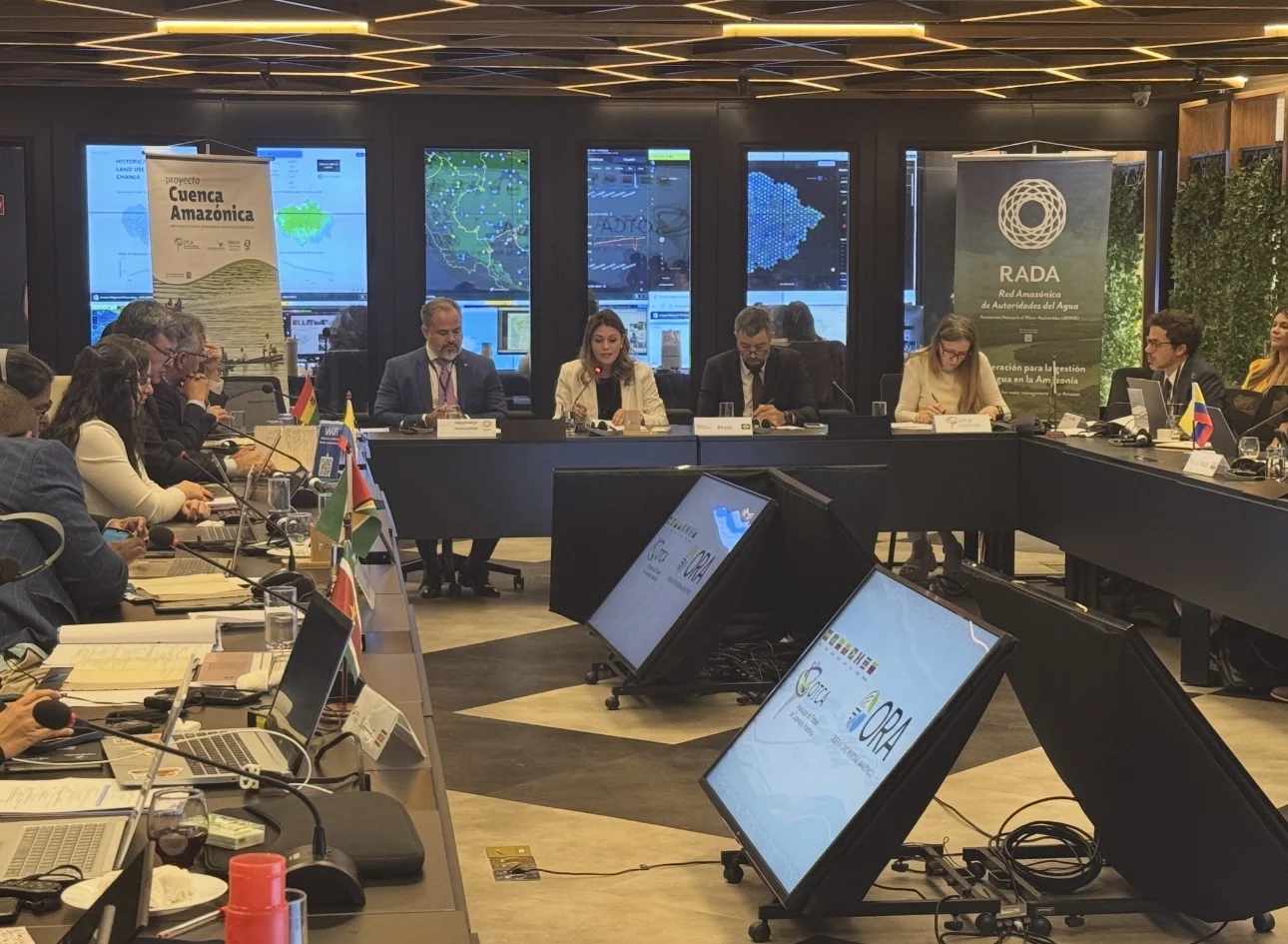
Representatives from the eight Member Countries of the Amazon Cooperation Treaty Organization (ACTO) participated, at ACTO headquarters in Brasília, in the 5th Meeting of the Amazon Basin Project Steering Committee, a strategic forum for regional coordination aimed at strengthening the implementation of the Strategic Action Program (SAP) for Integrated Water Resources Management (IWRM) in the Amazon Basin.
The meeting was attended by ACTO Executive Director Vanessa Grazziotin; the organization’s Environment Coordinator, Carlos Salinas; and Isabelle Vanderbeck, project manager for the United Nations Environment Programme (UNEP), the project’s implementing agency. During the meeting, the countries assessed technical and institutional progress, discussed regional priorities, and approved the 2025 Management Report, the 2026 Work Plan and Budget, as well as the Procurement and Events Plan. Participants also reaffirmed commitments related to monitoring, regional cooperation, and strengthening water governance in the Amazon Basin.
Regional governance and strategic coordination
During the opening of the meeting, Carlos Salinas highlighted some of the key achievements driven by the Amazon Basin Project throughout its implementation to strengthen Integrated Water Resources Management (IWRM) in the region. Among them, he mentioned the creation of the Amazon Network of Water Authorities (ANWA), the development of the Toolkit for Water Management in the Amazon, and the approval of regional monitoring protocols.
Salinas also highlighted progress in monitoring and information exchange, including the conceptual development of the Integrated Regional Water Resources Information Platform and the formation of the Regional Monitoring Group—initiatives considered essential for strengthening data interoperability and supporting decision-making processes based on scientific evidence.
“These results reflect the value of Amazonian cooperation and reaffirm that sustainable water management must continue to be a central focus of the regional agenda,” he said.
For her part, Isabelle Vanderbeck, UNEP program manager, highlighted the importance of continuing to strengthen coordination among the many initiatives currently underway in the region, including RADA, with the aim of maximizing impact.
“The transformation of the Amazon will come from coordination, collaboration, and the gradual development of sustainable regional mechanisms—both institutional and financial—on which countries and partners can collectively rely,” she noted.
Vanderbeck also reaffirmed UNEP’s commitment to the process of consolidating and operationalizing ACTO’s Amazon Mechanism for Cooperation and Action (MACA).
-
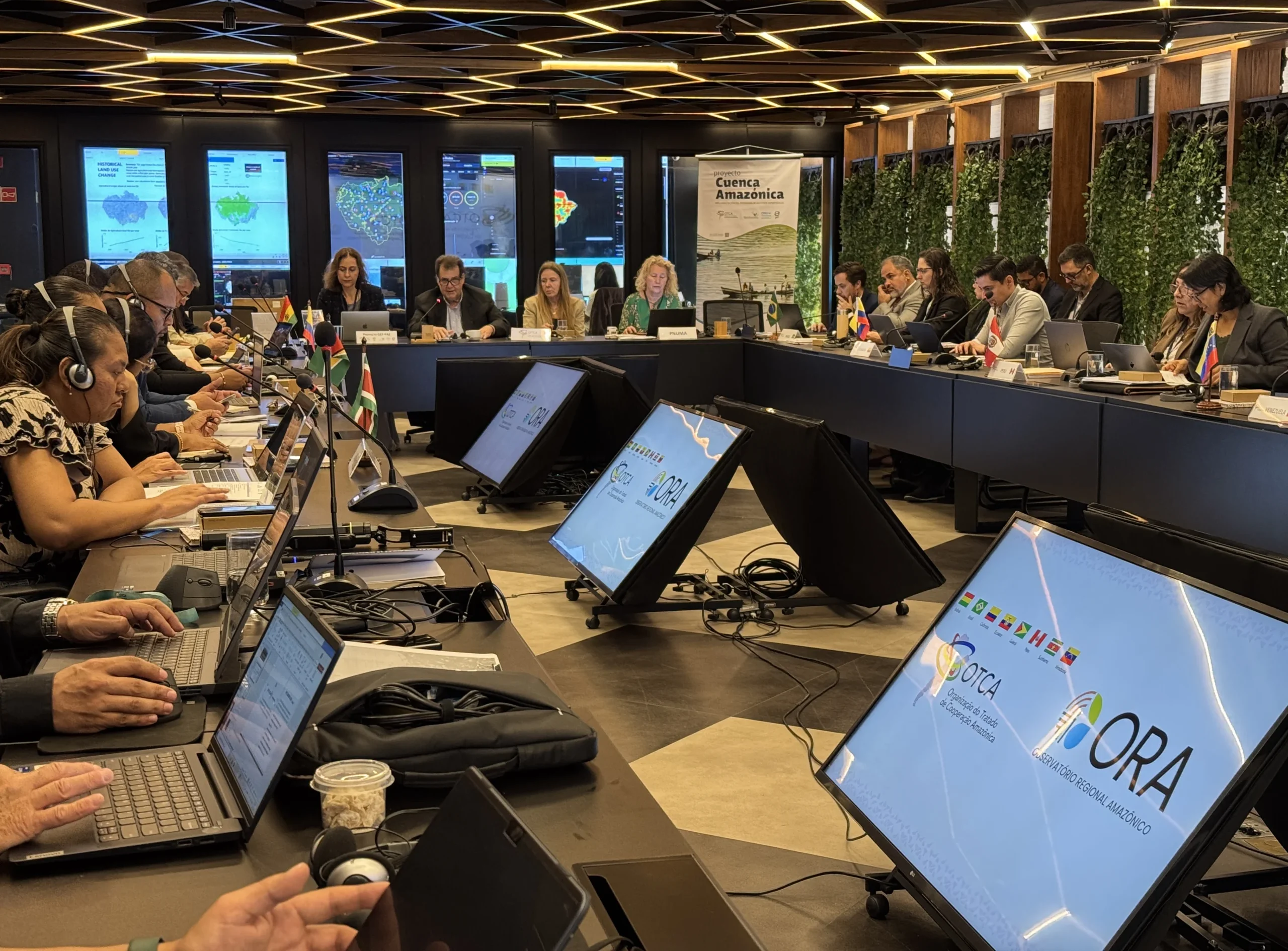
- Representatives of ACTO Member Countries during the 5th Meeting of the Amazon Basin Project Steering Committee at the Amazon Regional Observatory (ORA).
-
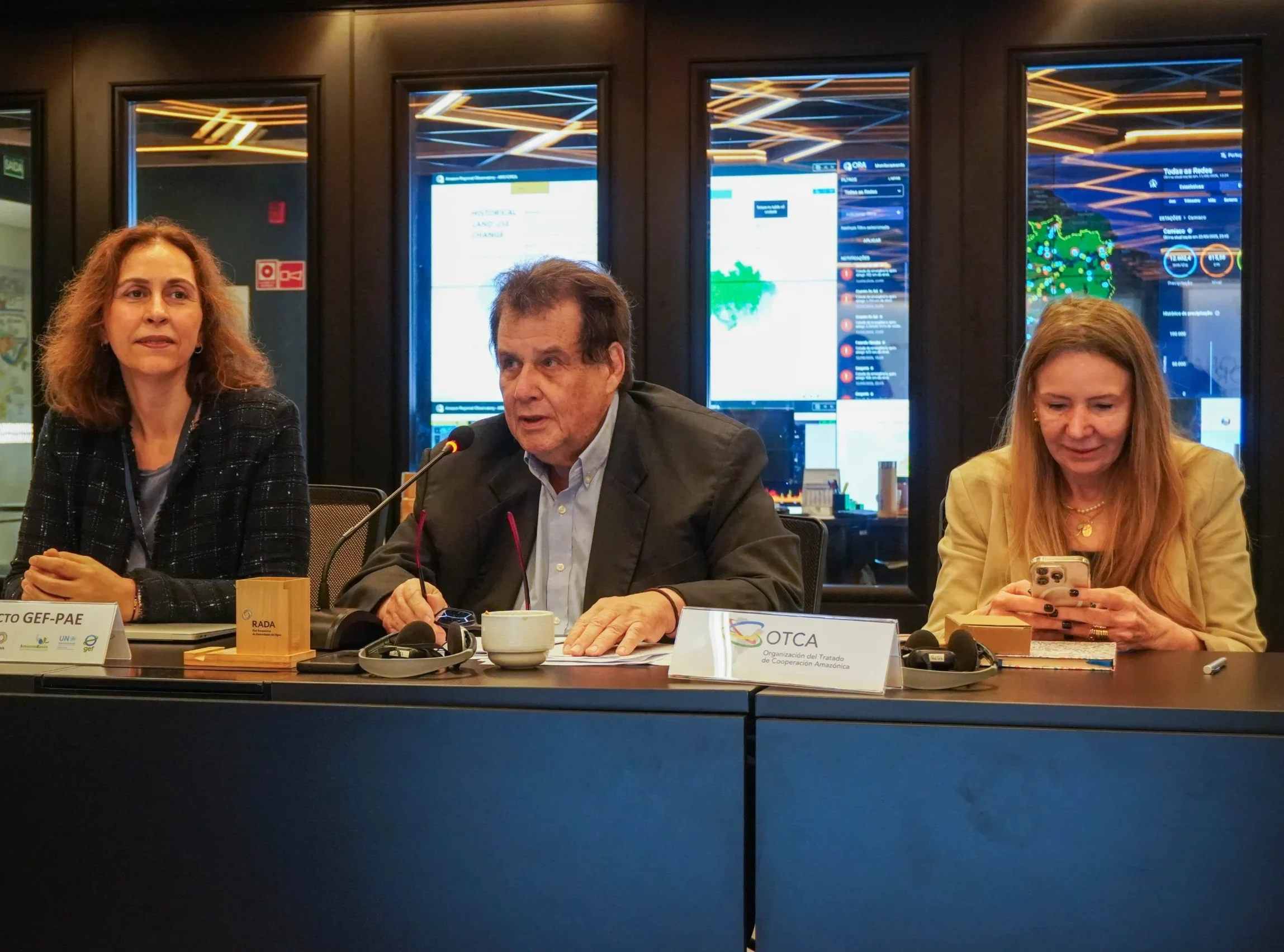
- Carlos Salinas, ACTO Environment Coordinator, during the opening of the 5th Meeting of the Amazon Basin Project Steering Committee. Photo: Adriana Herrera
Technical and Institutional Progress of the Amazon Basin Project
During the meeting, the coordinator of the Amazon Basin Project, María Apostolova, presented the main achievements made in 2025. Among these, she highlighted the adoption of regional monitoring protocols for the Amazon Water Quantity and Quality Networks (RHA and RCA) and progress in actions aimed at strengthening both regional networks, including enabling activities, institutional capacity building, training on regional protocols, and education in Amazonian hydrology and spatial hydrology. Apostolova also highlighted the development of the White Paper on the role of ACTO in regional cooperation for IWRM in the Amazon Basin and progress on the Integrated Regional Information Platform on IWRM.
Among other achievements, Apostolova highlighted the creation of the Ad Hoc Water Cultural Group (WCG), the development of the prototype platform for the Compendium of Cultural, Artistic, and Educational Activities in the Amazon Region/Basin, and the presentation of the Mercury Overview in the Amazon Region.
Among the progress made throughout the project’s implementation, the strengthening of technical capacities in Member Countries was highlighted, with 1,166 professionals trained in water resources management since 2023.
Regarding the national and binational interventions implemented under the Project, the completion of four initiatives—three national and one binational—was reported, along with the continuation of 15 other interventions currently in progress .
Monitoring of extreme events and the strategic role of information
The Steering Committee acknowledged the progress made in initiatives related to glacier monitoring and community-based monitoring of aquatic ecosystems and groundwater, highlighting their contribution to strengthening water security, adapting to climate change, and generating strategic information for IWRM.
The meeting also highlighted progress on the Trinational, Mantaro, and Río Negro Early Warning Systems (EWS), considered essential tools for strengthening the region’s capacity to respond to extreme events in the Amazon basin. Participants emphasized that investments in prevention and early warning yield benefits significantly greater than the costs of remediation and reconstruction.
In this context, the Steering Committee recommended expediting the procedures for donating monitoring equipment to Member Countries that require it, with the aim of ensuring the sustainability, operation, and maintenance of the installed systems.
Progress was also highlighted in regional communication, the production of technical and audiovisual materials, and the consolidation of the Amazon Basin Project website as a regional platform for dissemination, knowledge exchange, and visibility of results.
Recommendations of the Steering Committee
During the deliberations, the Steering Committee emphasized the importance of strengthening the replicability and scaling up of interventions developed within the framework of the Project, especially those aimed at strengthening hydrological, hydrometeorological, and environmental monitoring networks in the Amazon region.
The Committee also highlighted the importance of the Toolkit for Water Management in the Amazon Region as a regional instrument to support IWRM and encouraged Member Countries to continue promoting its use and strengthening it.
It recommended following up on the process of approving the White Paper on the role of ACTO in regional cooperation for IWRM in the Amazon Basin, within the framework of ANWA/PTA, and on updating the Transboundary Diagnostic Analysis (TDA) and the Strategic Action Program (SAP).
In addition, the Steering Committee encouraged Member Countries and regional stakeholders to continue advancing the Water Culture Agenda and contributing to the Compendium of Cultural, Artistic, and Educational Manifestations of the Amazon Region/Basin, as well as to the other objectives of the water culture component.
Finally, the Steering Committee recommended that the results of the project and the meeting be presented at the 4th Meeting of the Amazon Network of Water Authorities (RADA).
Related news
25 de September de 2026
Colombia launched, in late July, the series of National Nexus WEFE Workshops to be held across the eight Member Countries [...]
23 de September de 2026
Communities from six locations in the Putumayo and Amazon River basins in Colombia participated in the development of a community-based [...]
22 de September de 2026
The Amazon Network of Water Authorities (ANWA) has approved its 2026–2028 Work Plan, which sets out the priorities and actions [...]
