World Water Day, celebrated on March 22, is a date established by the United Nations (UN) and, in 2026, features the theme “Water and Gender,” which will guide debates, campaigns, and actions throughout the year, highlighting the importance of ensuring the equitable participation of women and men in water resource management. In many regions of the world, especially in rural areas and traditional communities, women play a central role in the day-to-day management of water—whether in domestic supply, family hygiene, or productive activities such as agriculture. Despite this fundamental contribution, women still face inequalities in access to resources, technologies, training, and decision-making spaces.
-

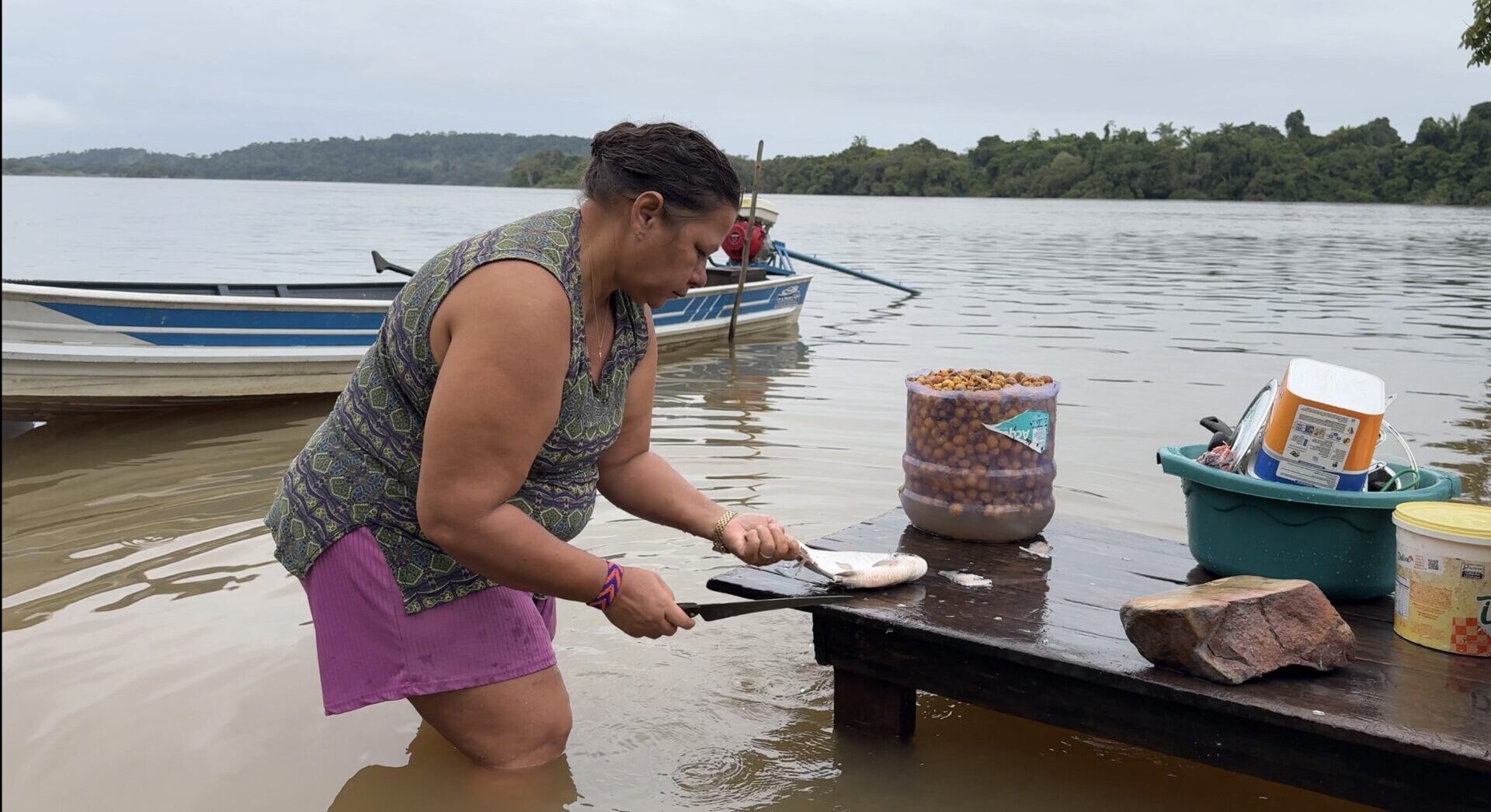
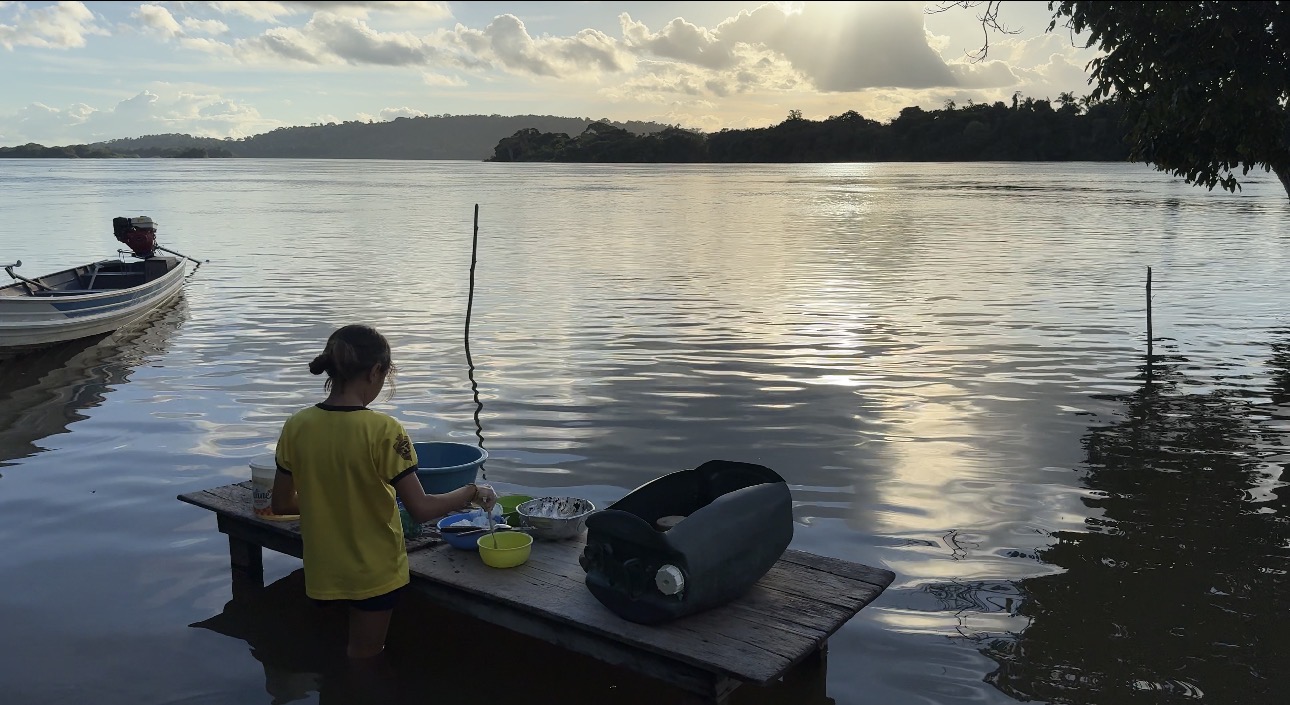
- Amazonian woman prepares fish by the riverside for cooking, an activity traditionally carried out by women in riverside communities.
-

- A girl washes dishes by the riverside in the Amazon, a daily task often taken on by women from an early age in riverside communities.
The theme of World Water Day 2026 highlights that the water crisis disproportionately affects women and girls, with direct impacts on their health, safety, education, and economic opportunities, especially in contexts of limited access to safe water and sanitation services (UN Women; UNICEF, 2026).
In Latin America, this scenario is repeated and intensified by climate change: women, especially in rural areas and indigenous communities, continue to lead daily water management while facing structural barriers to their participation in decision-making spaces. Although they play a central role in resource management at the community level, their presence in leadership positions in the water and sanitation sectors remains limited, which restricts their influence over policies and programs related to water use and governance (UN Women).
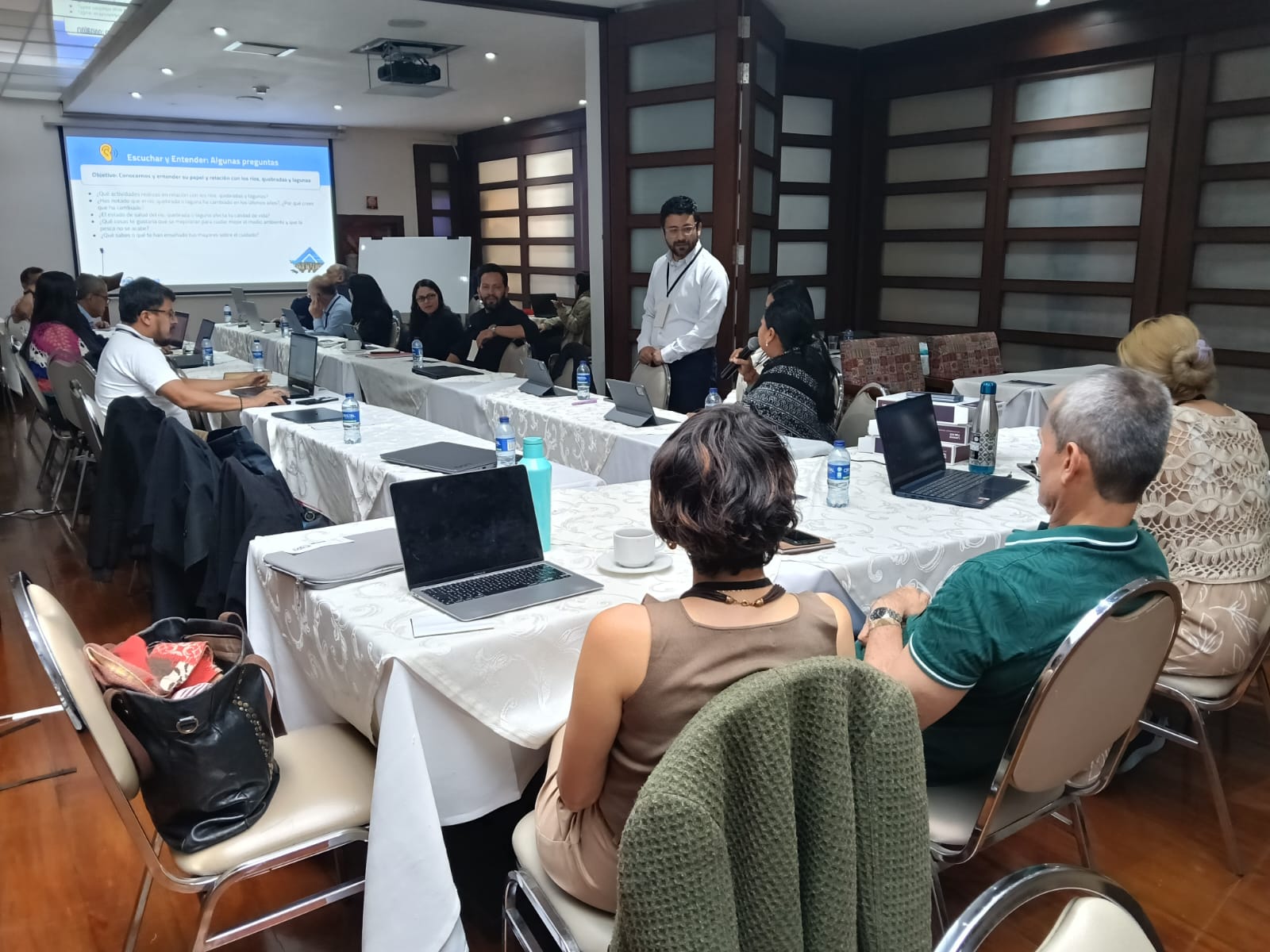
In the Amazon region, the Belém Declaration (2023) establishes gender equality as a cross-cutting principle and, in line with this commitment, the Amazon Cooperation Treaty Organization has been incorporating this perspective into water management through the Amazon Basin Project (ACTO/UNEP/GEF), within the framework of the Strategic Action Program (SAP). Between 2023 and 2024, the project conducted a series of in-person training sessions in all Amazonian countries, targeting professionals and institutions involved in Integrated Water Resources Management (IWRM). In total, more than 1,000 water management professionals were trained, contributing to strengthening national capacities to plan, monitor, and evaluate the incorporation of a gender perspective into water-related policies, programs, and projects, as well as deepening regional cooperation in this field.
Participants in the activities included technical staff from public institutions, experts, representatives of organizations, and other stakeholders interested in integrating the gender dimension into water management. By fostering this dialogue, the project sought to broaden understanding of existing inequalities and encourage more inclusive decision-making processes in water governance.
The training sessions combined participatory methodologies and practical tools to integrate the gender perspective throughout the entire project cycle—from diagnosis to monitoring. Among the tools presented is the Gender Scanner, developed by ECLAC and the German Agency for International Cooperation (GIZ), which allows for the assessment of the degree to which this perspective is incorporated into policies and initiatives related to water management.
-

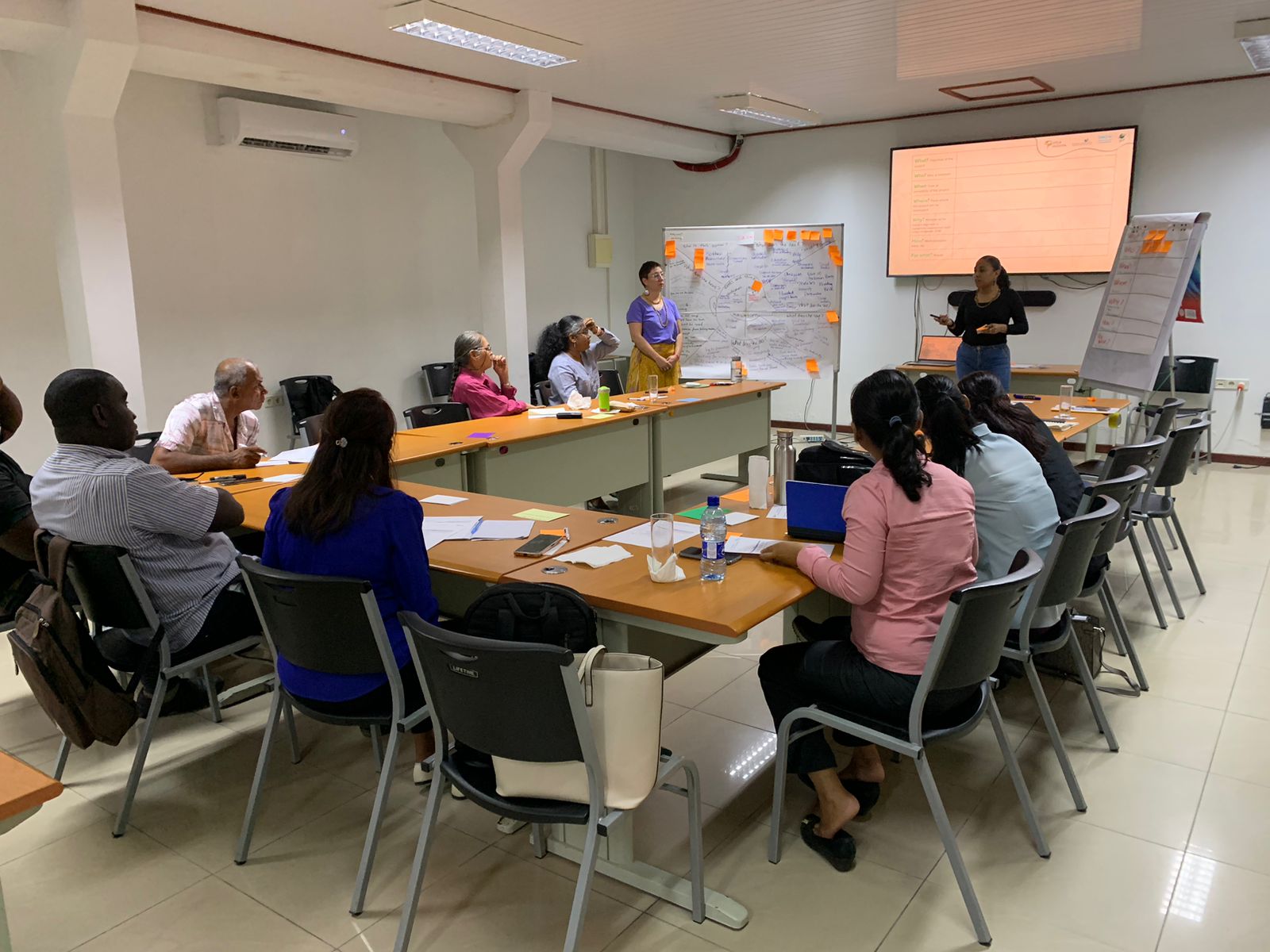
- Gender capacity-building in Paramaribo, Suriname.
-

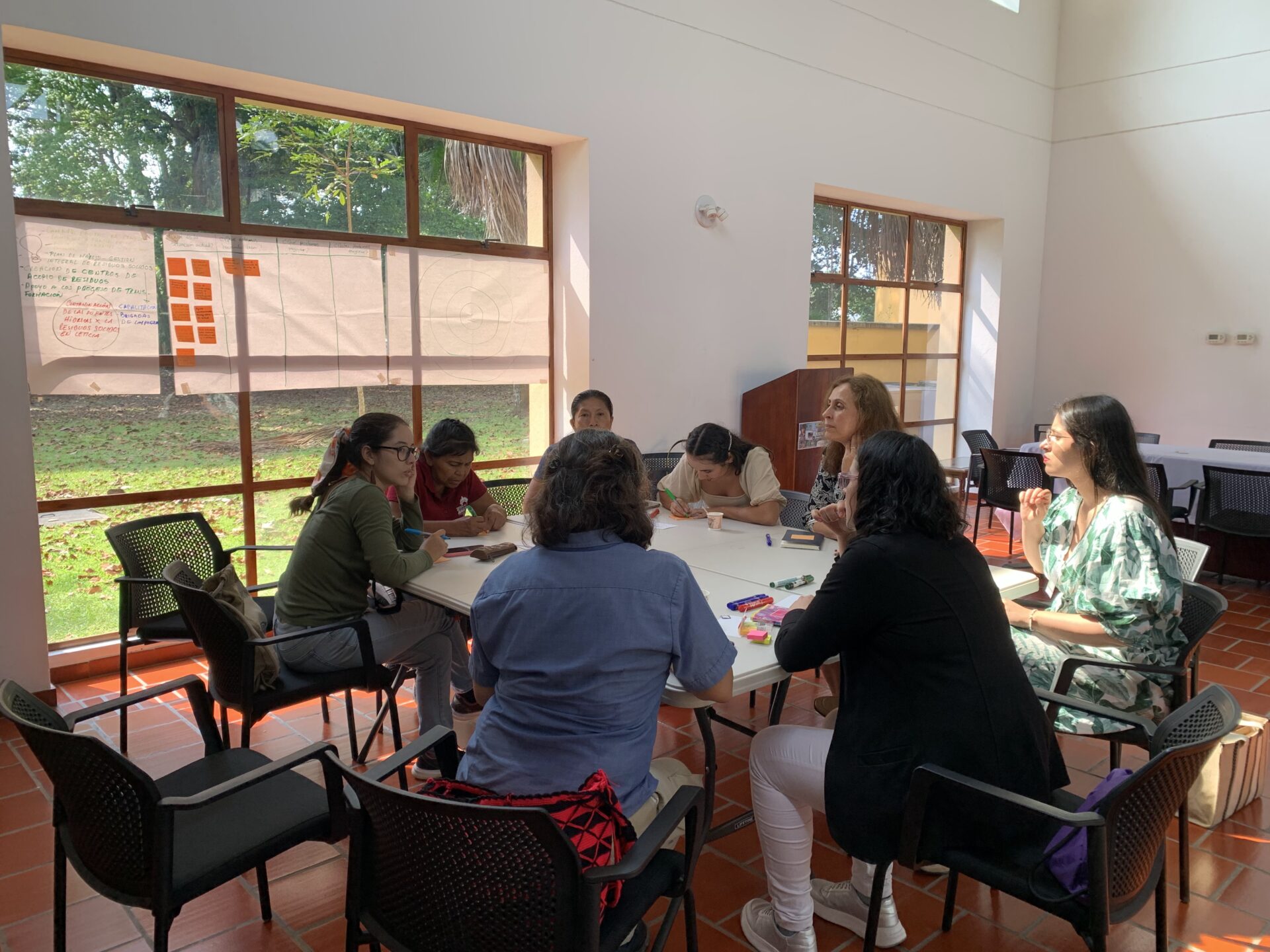
- Gender training in Leticia, Colombia
-

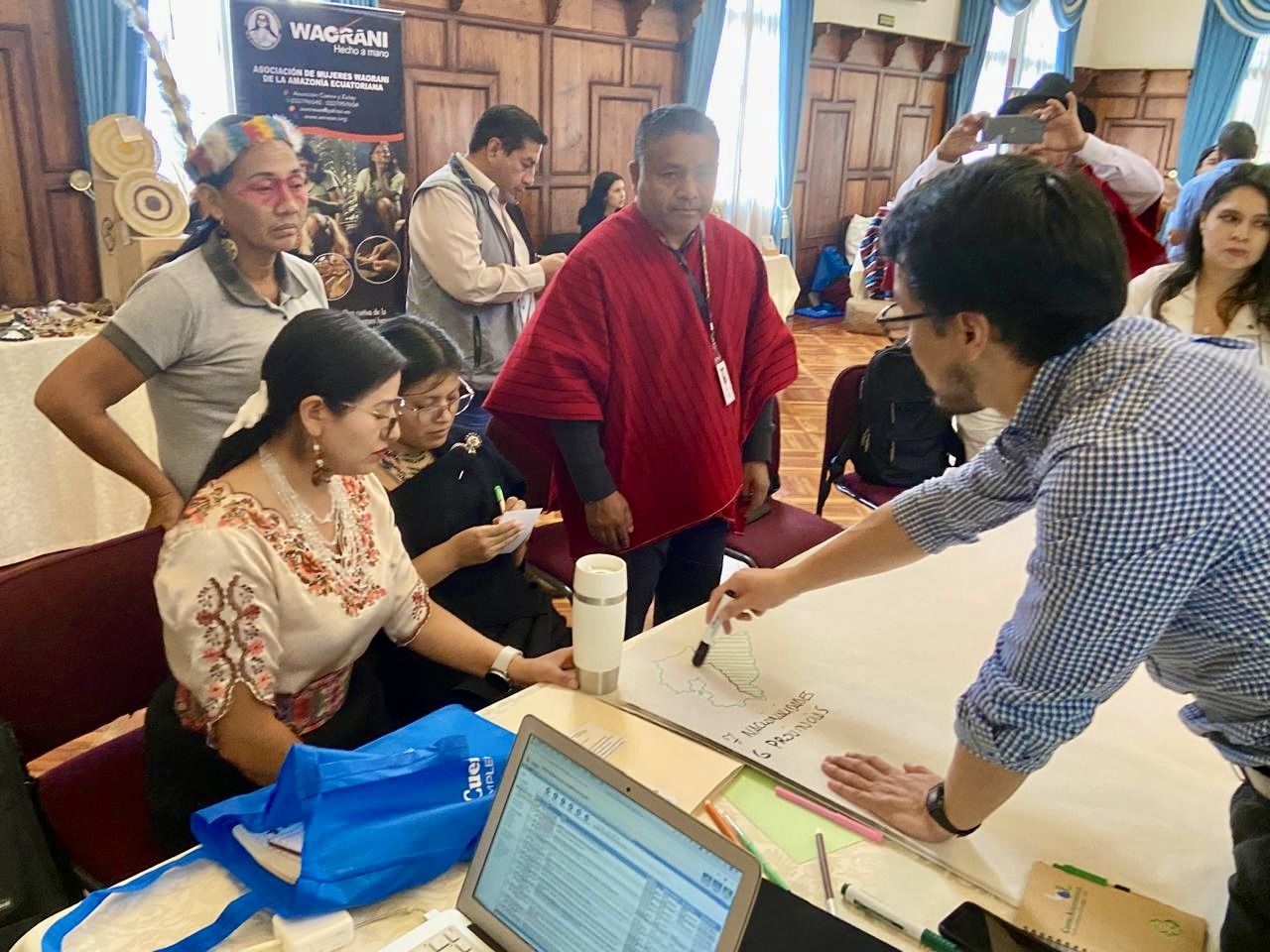
- Gender capacity-building in Quito, Ecuador.
As a legacy of this series of in-person training sessions, the Amazon Basin Project launched, in 2025, the online course “Tools for Gender Equality in the Formulation of Water Management Policies, Plans, Programs, and Projects,” developed in partnership with the National Water and Basic Sanitation Agency of Brazil (ANA). The initiative has already trained more than 60 participants, expanding the reach of the methodologies and tools presented during the trainings held in Amazonian countries and making them accessible to a wider audience.
Online Course Expands Training on Gender and Water Management in the Amazon
The course is free, self-paced, and available in Portuguese, Spanish, and English on ANA-Brazil’s learning platform.
Lasting 20 hours, the training is self-paced and asynchronous, allowing participants to organize their studies over a period of 5 to 60 days. The content is structured into six modules, covering everything from the context of gender inequalities to methodologies for the diagnosis, design, implementation, monitoring, and evaluation of water management projects with a gender perspective.
As with in-person training sessions, the course presents the Gender Scanner as a central tool for analyzing and strengthening the incorporation of this dimension into policies, plans, and projects related to water resources.
Training open to diverse audiences
The online training has already trained more than 60 participants and is aimed at operators of plans, programs, and projects within the SAP, public servants, members of civil society organizations, international cooperation agencies, and others interested in promoting gender equity in water management.
Participants must complete all activities and achieve the minimum passing score to receive a certificate issued by the Amazon Basin Project and ANA-Brazil.
Available in Portuguese, Spanish, and English, the course expands access to knowledge and tools that contribute to promoting more inclusive and equitable water management throughout the Amazon Basin.
Complete instructions for enrolling in the course are available at: https://aguasamazonicas.otca.org/curso/tools-for-gender-equality/?lang=en
Related news

Post
7 de May de 2026
The application of open data and digital tools in water management was the central theme of another stage of the [...]
-
Post
31 de March de 2026
In the region between the Xingu and Iriri rivers, known as Terra do Meio, in the Brazilian Amazon, areas previously [...]
-
Post
30 de March de 2026
On March 5 and 6, 2026, the city of Bogotá, Colombia, hosted a technical meeting that brought together experts and [...]