

In the region between the Xingu and Iriri rivers, known as Terra do Meio, in the Brazilian Amazon, areas previously degraded by illegal occupation are once again becoming covered in forest—and offering new possibilities for those who live there. Located in the municipality of Altamira, Terra do Meio is a mosaic of socio-environmental protection—essential for biodiversity and strategic for containing the advance of deforestation.
The restored areas faced difficulties in recovering their original vegetation, where the prevalence of exotic grasses prevented the return of the native forest. With the restoration of 50 hectares, achieved through the planting of approximately 175,000 native trees in the Extractive Reserves of the Xingu and Iriri rivers, the intervention by the Amazon Basin Project (OTCA/UNEP/GEF), carried out in partnership with the Brazilian Water and Basic Sanitation Agency (ANA) and the Socio-Environmental Institute (ISA), is in its final phase, with a final planting activity scheduled for April. More than just restoring deforested areas, the initiative combines ecological restoration, income generation, and community empowerment, while also contributing to the protection of water resources and water management in the region, based on the establishment of a forest seed supply chain and the implementation of a payment for environmental services (PES) mechanism.
-
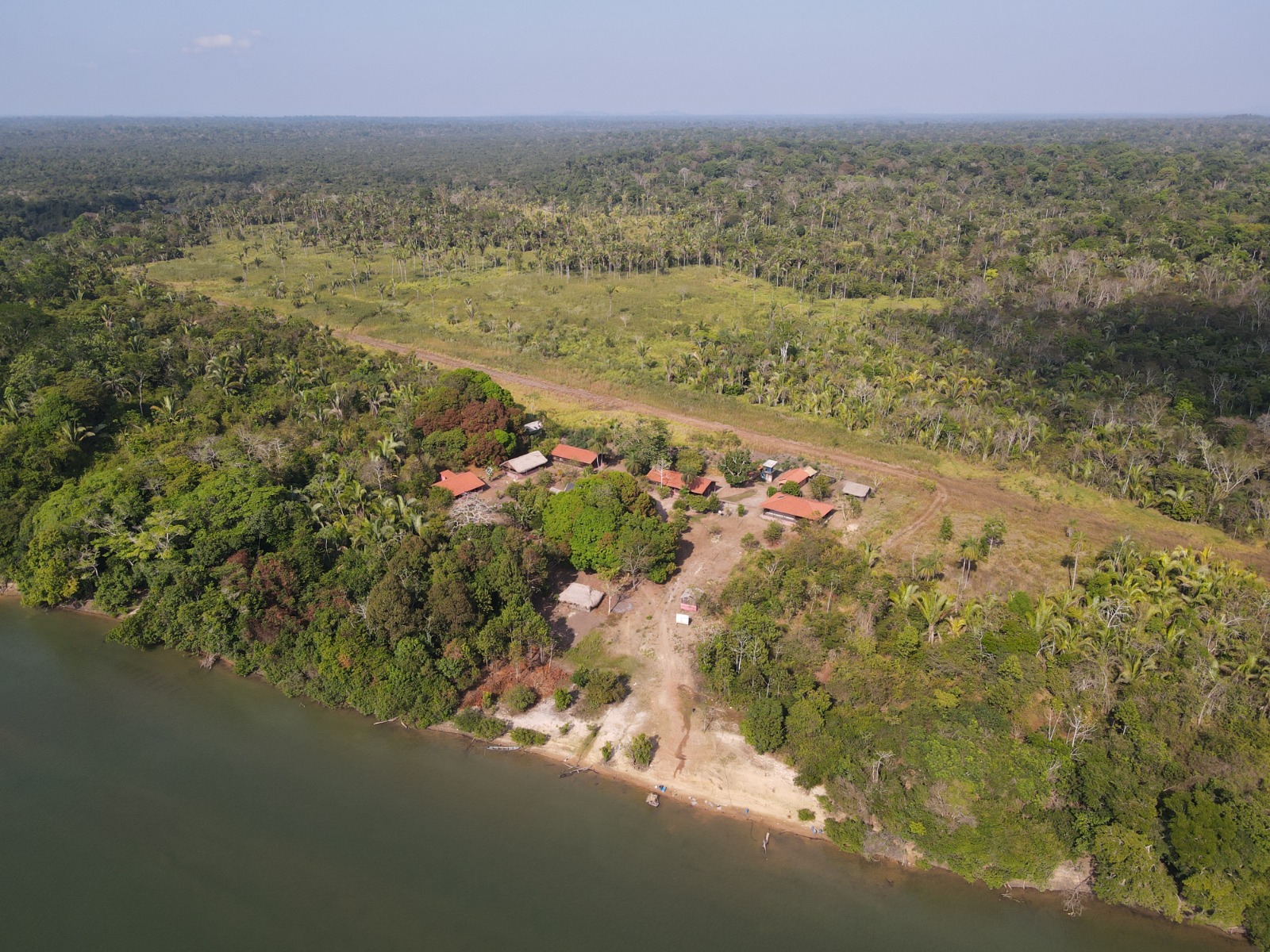
- 2023. Gabiroto community, in the Xingu River Extractive Reserve, showing a deforested area prior to restoration.
-
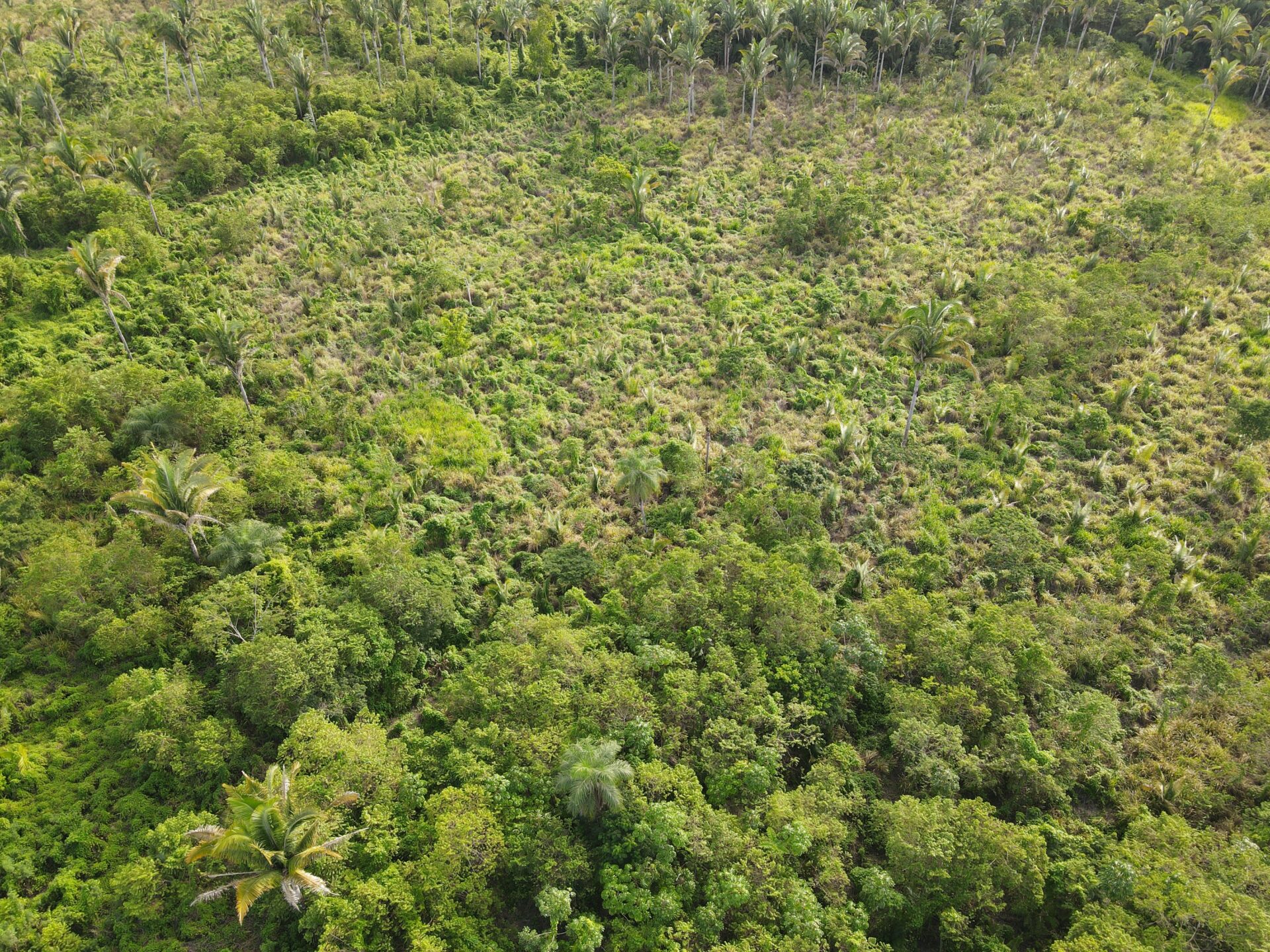
- 2026. Area undergoing restoration in the Xingu River Extractive Reserve, with trees already in their second stage of growth.
This process began three years ago with the reforestation of the first intervention area—25 hectares in the Xingu River Extractive Reserve, along the riverbanks. The planting involved 25 people from the communities within the reserve—men, women, and youth—with technical assistance from ISA and educational activities focused on children. The group collected more than 30 species of forest seeds and combined them with legume and grass seeds used to improve soil fertility (green manure), forming the “muvuca”—a direct-seeding technique that accelerates vegetation regeneration by bringing together plants at different stages of growth. The expectation is that, in ten years, the forest will be fully established.
-
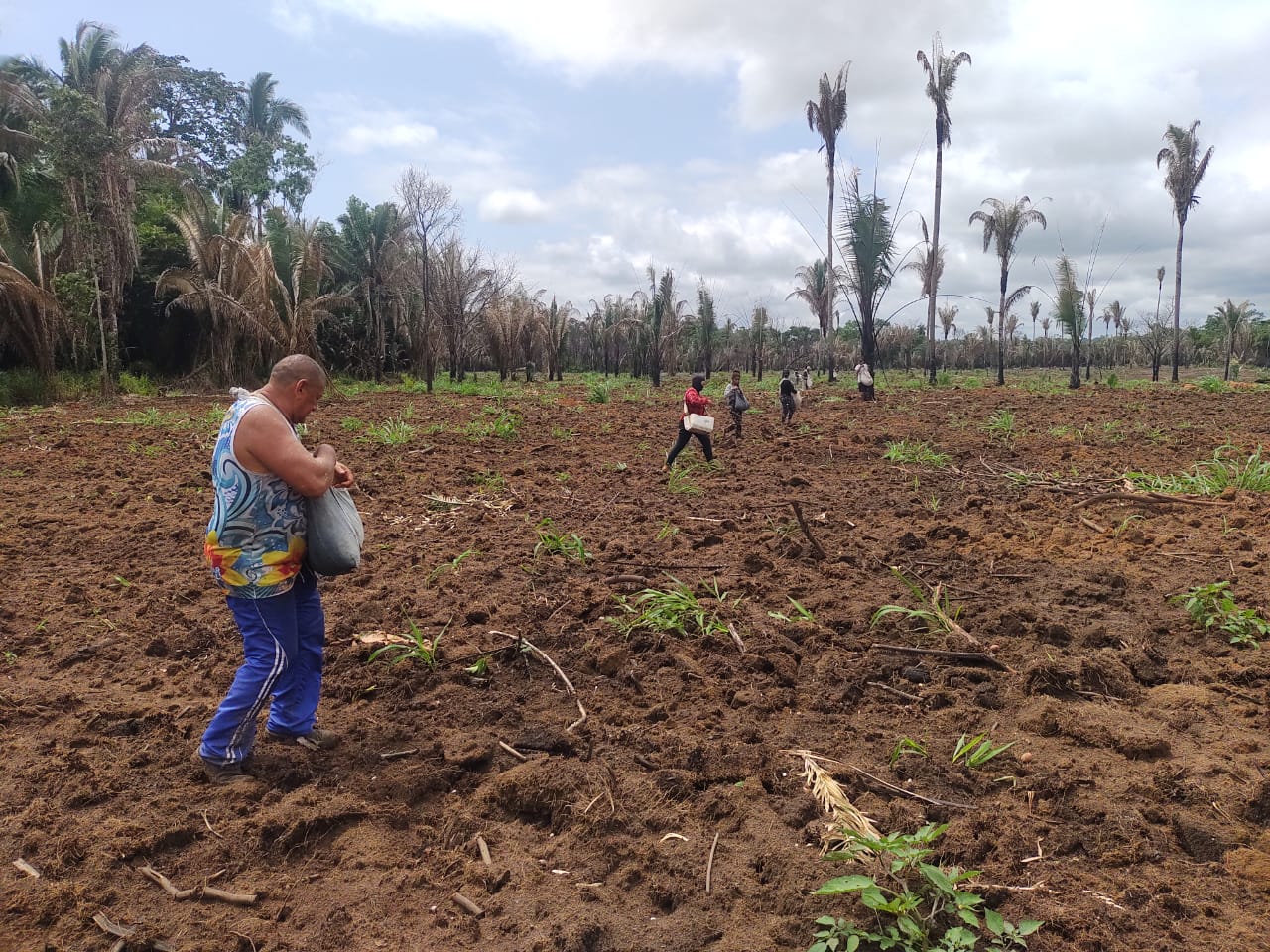
- Residents of communities in the Xingu River Extractive Reserve participate in planting using the “muvuca” technique, a forest restoration method.
-
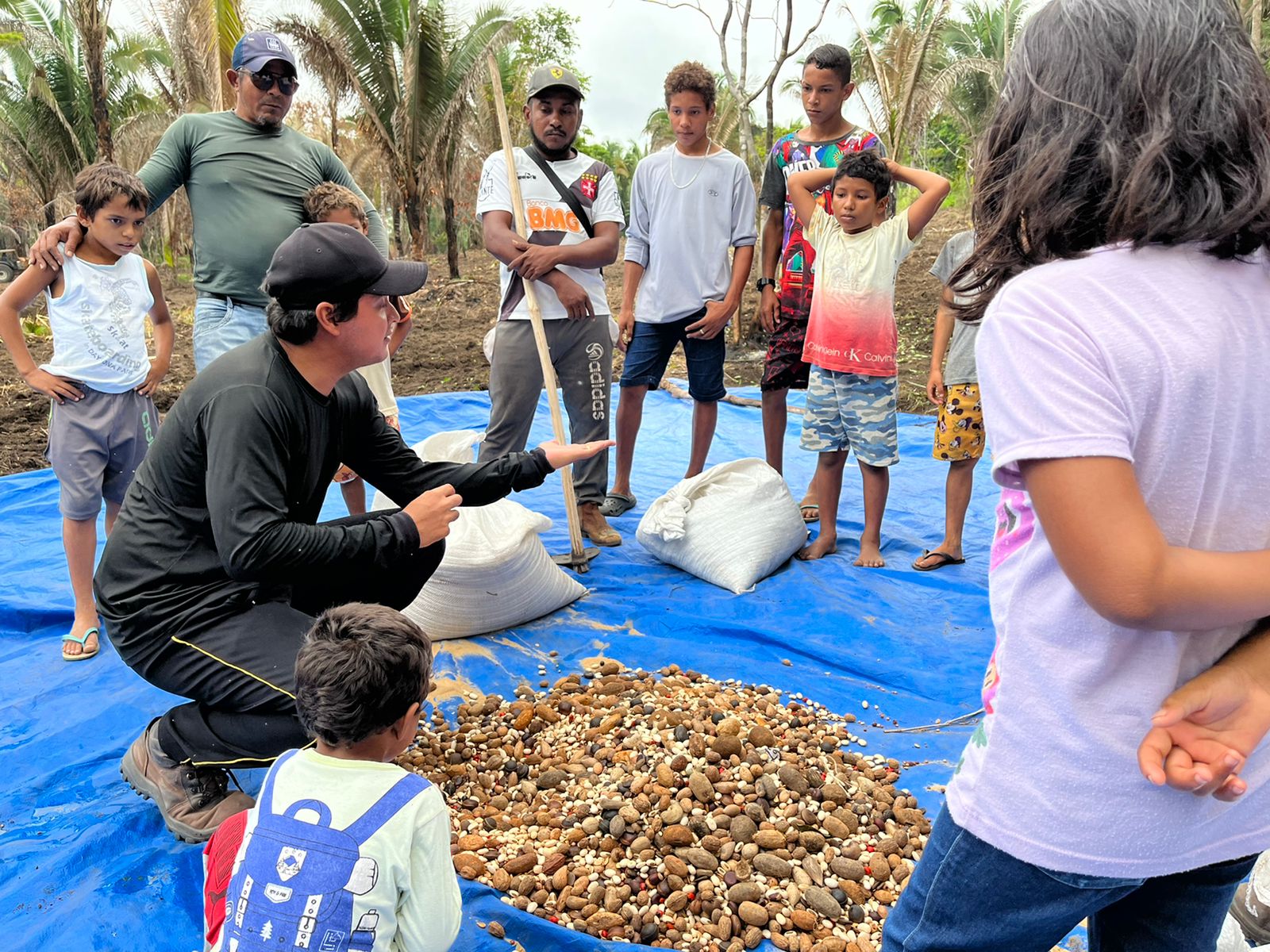
- Children participate in an educational activity with seeds in the Xingu River Extractive Reserve.
The results observed there go beyond the landscape: the restored area has begun producing seeds that the communities themselves collect and sell to other restoration projects in the Brazilian Amazon, creating a new source of income associated with the standing forest. Marinalva Ribeiro da Silva, a riverine resident who lives next to the restored area, found a new source of income in seed collection, which complements other traditional activities, such as fishing. Since the area was planted—a process in which she participated alongside her husband and children—the couple has also dedicated themselves to this activity, ensuring greater financial stability for the family—as well as more time with their younger daughters.
“For me, life as a collector is good; it’s worth it. On collection days, I leave home in the morning and return in the early afternoon, spending the rest of the day with my younger daughters. Through this work, I also help support my four children who are studying in Altamira,” she says.
-
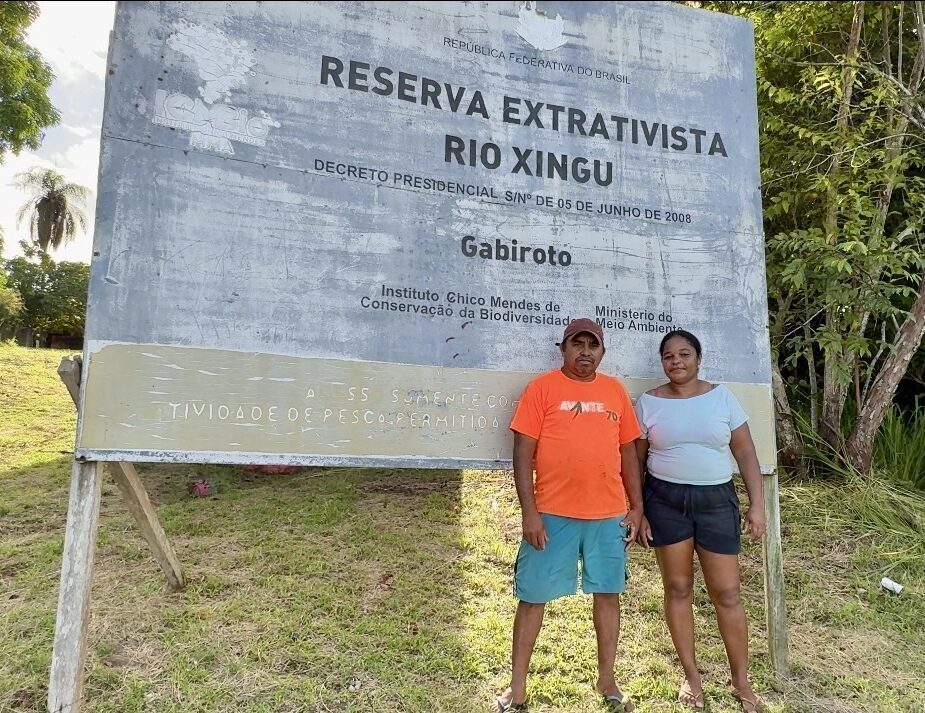
- Ademir and Marinalva Andrade, a couple living in the Xingu River Extractive Reserve, where seed collection contributes to generating income for local families.
-
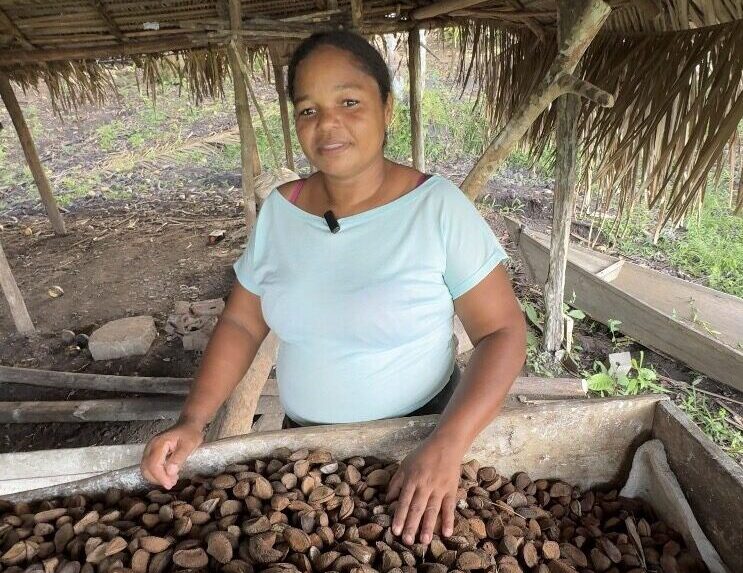
- Marinalva Andrade with Brazil nut seeds collected in the Xingu River Extractive Reserve.
During a technical visit in March to the restored forest area in the Xingu River Extractive Reserve, ANA’s Specialist in Water Resources and Basic Sanitation, Marcelo Pires, highlighted another key aspect of the initiative. According to him, the initiative successfully combines forest restoration with the protection of the Xingu’s water resources, directly contributing to the balance of the region’s hydrological cycle. This integration, he notes, is one of the main factors making the experience replicable in other countries that are part of the Amazon Cooperation Treaty Organization (ACTO), within the framework of integrated water resources management in the Amazon Basin. “After all, without forest there is no water, and without water there is no forest,” he stated.
From collection to commercialization: how the forest seed chain works
The seed collection activity, which today generates income for 312 collectors—53% of whom are women—is part of the Forest Seed Chain, structured with the contribution of the Amazon Basin Project within the scope of Terra do Meio Network—a community organization that coordinates the production, processing, and marketing of forest products from the region’s extractive reserves and indigenous lands.
Collection does not occur randomly. At the beginning of each year, Terra do Meio Network determines, together with buyers, the demand for seeds. Based on these agreements, the quantities are distributed among local organizations, which mobilize collecting families over the course of the months, according to the availability of species in each territory. This planning allows for aligning what the forest can offer with what restoration projects require, ensuring greater predictability for communities and efficiency in marketing.
The collection work, the starting point of the chain, requires knowledge of the territory and careful management, respecting the forest’s natural cycle and ensuring that part of the seeds remain in the environment, both for natural regeneration and to feed wildlife. Still at this stage, the seeds undergo an initial selection and quality control, which are essential to ensure they meet buyers’ requirements and fulfill their role in restoration.
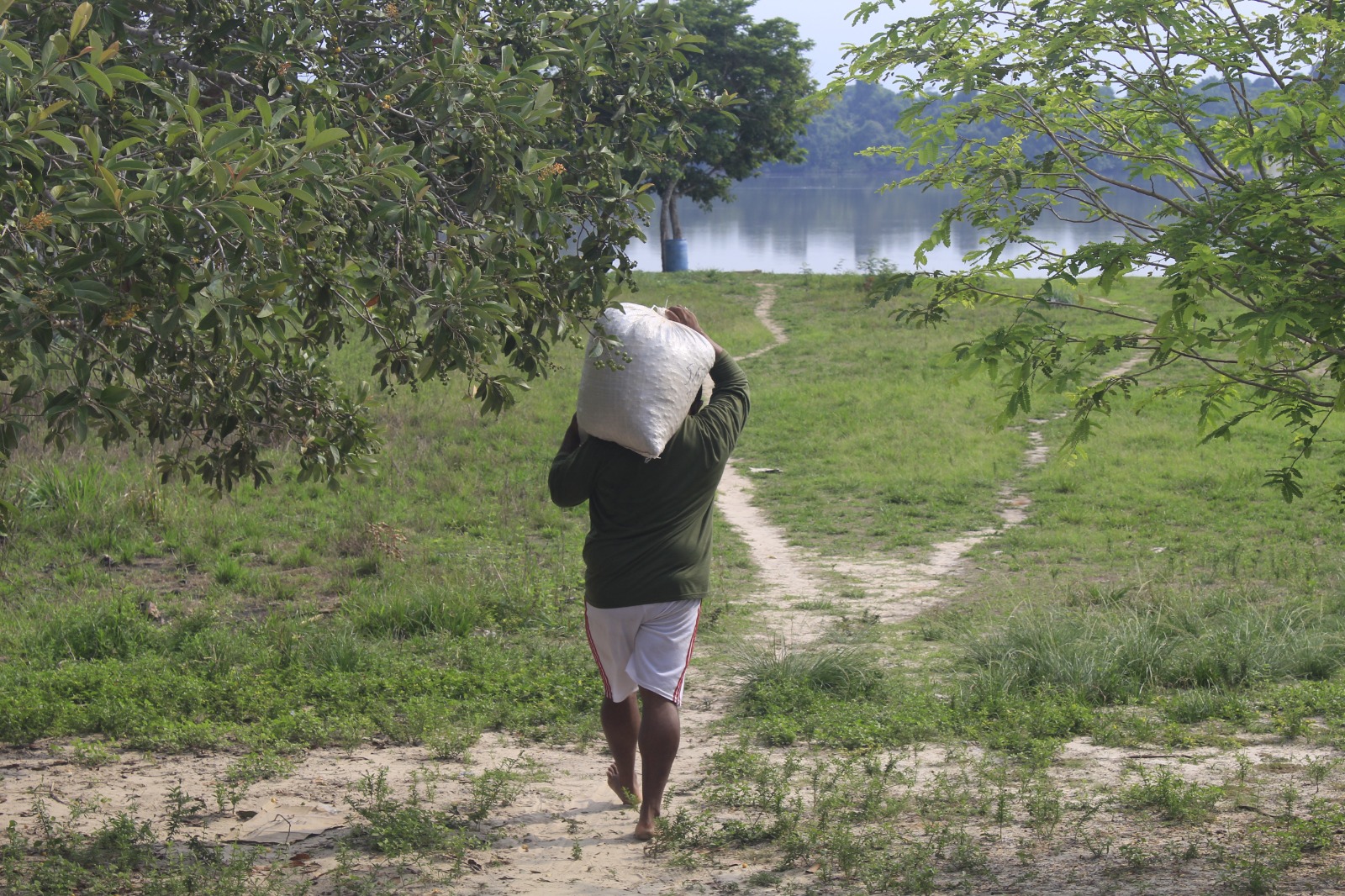
Seed collection in the Xingu River Extractive Reserve, an activity that requires careful handling and knowledge of the forest.
To this end, the collectors who are part of the chain receive ongoing training. Elisângela Xipaya, an ISA technician, explains that this training is central to strengthening the initiative. “The training helps keep collectors engaged and raises awareness about the role of seeds in restoration. When they understand that every seed collected will be used to restore areas in the Amazon rainforest, they come to value the work they do even more,” she says.
After collection, the seeds pass through local community management structures, where they are received, weighed, and organized—and where families receive immediate payment, according to collectively defined rates. This is one of the central points of the supply chain, which helps reduce dependence on middlemen and provides greater income predictability for producers.
Over the past three years, the Amazon Basin Project has helped secure working capital for these structures, strengthening the capacity for immediate payment to families—which totaled nearly $60,000 with contributions from other partners of the Terra do Meio Network—and the management of the seed supply chain.
In the Morro Grande community, within the Xingu River Extractive Reserve, managing one of these support points has become an important source of income for the couple Sinha Kuruaya and Alcione Freitas, who also work in seed collection. In 2025, the income generated from local management and seed collection reached about $1,200, an amount the family has been investing in home improvements. “We’re buying materials to build a new roof. It used to be thatched; now we’re going to put on tiles. This already helps us avoid having to cut down more palm trees,” explains Sinha.
-
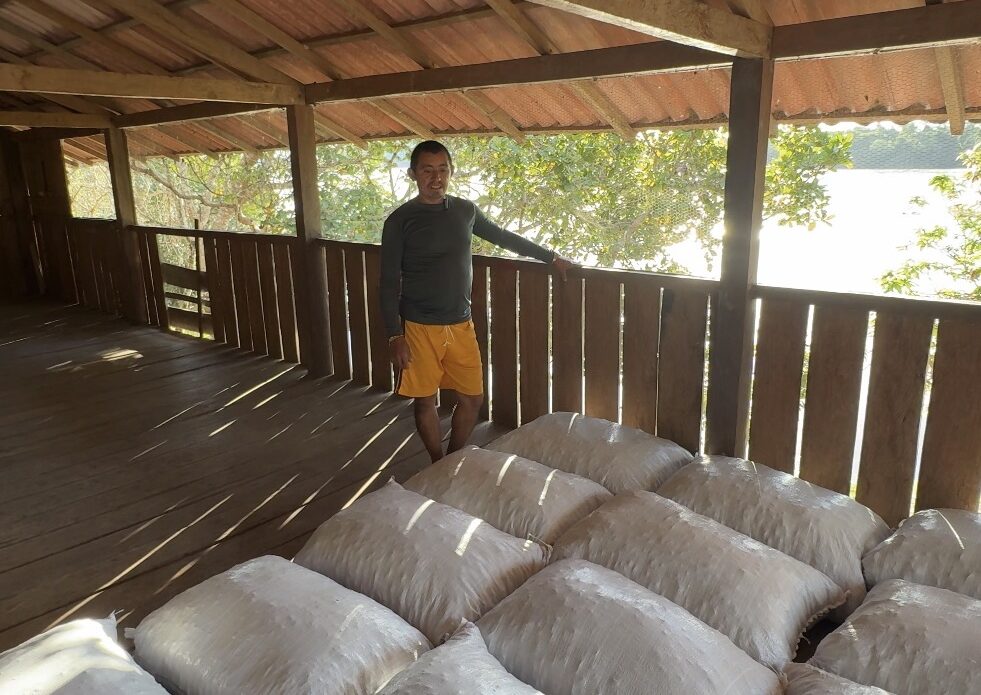
- Sinha Kuruaya, manager and collector, at the storage facility of the Morro Grande community in the Xingu River Extractive Reserve, where seeds delivered by local collectors are stored.
-
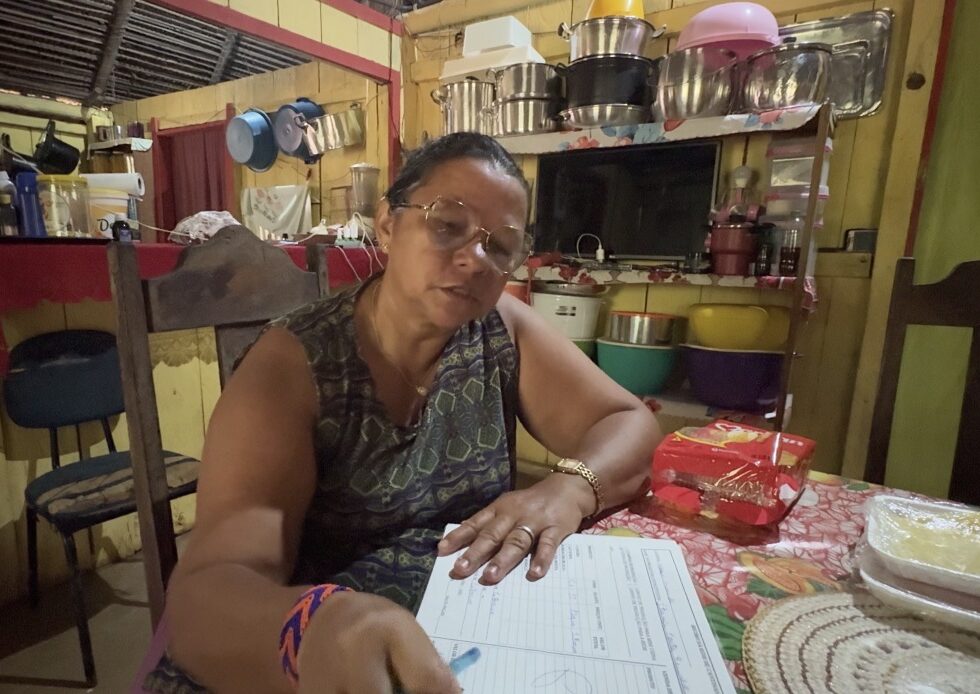
- Alcione Freitas, a collector and manager, records the seeds received at the management facility of the Morro Grande community in the Xingu River Extractive Reserve.
From these points, the seeds are transported to the city of Altamira in a logistics operation coordinated by local boatmen. In a region marked by great distances and travel that is predominantly by river, transport is carried out in small shipments, adapted to local vessels with limited capacity and to navigation conditions.
The journey to the city can take days. In Altamira, at the Terra do Meio Network Seed House, the production is received, re-evaluated, and organized for storage. There, each batch undergoes further sorting, is labeled with information on species, origin, and date of arrival, and is then stored under controlled temperature and humidity conditions.
The process ensures the standardization and traceability of the seeds, essential steps for their commercialization. “When the seeds arrive, we check the quality, weigh them, identify them, and organize them by batch. This allows us to know where they came from and where they’re going,” explains Wenderson da Silva Santos, one of the managers at the Seed House.
For Denise Graça, who also works in the Seed House’s management, the importance of the space goes beyond its technical function. “By storing these seeds, we preserve the life they carry and all the collective work of the communities,” she says.
Francisco de Assis Oliveira, president of Terra do Meio Network, highlights that the Forest Seed Chain is one of the most important initiatives for the organization. “It protects the forest, generates income, and ensures people remain in the territory,” he says. “It is work done with professionalism, where people earn without destroying, maintaining the forest’s balance and ensuring the continuity of the life it sustains. The commitment to the forest is what drives this work. Because without the forest, there is no Terra do Meio Network and no products to be sold.”
Establishment of the PES Mechanism
In 2024, Terra do Meio Network developed and implemented the first proposal for a Payments for Environmental Services (PES) Mechanism aimed at traditional peoples and communities. In this context, the Terra do Meio Fund was created, a community-based resource governance mechanism linked to socio-biodiversity economies, including the Forest Seed Chain, and funded by PES resources and other sources.
The Fund enables communities to address emergencies, invest in management, strengthen collective structures, and support governance initiatives. It is managed by a committee composed of Indigenous peoples, riverine communities, agroextractivists, technical experts, and the Network’s board of directors, ensuring participatory and transparent decision-making. This arrangement strengthens local autonomy and ensures that payments for environmental services are used for the collective benefit and for forest conservation.
Following a negotiation process that began in 2023, the Fund’s regulations were formalized in 2025, accompanied by financial contributions—including $10,000 from the Amazon Basin Project. This milestone marks the Fund’s ability to sustain community actions in an autonomous and participatory manner.
Strengthening Amazonian water management
With the final seeding phase scheduled for April in the Iriri River Extractive Reserve, the Amazon Basin Project’s intervention — implemented by the Amazon Cooperation Treaty Organization (ACTO), in partnership with the National Water and Basic Sanitation Agency (ANA) and the Socio-Environmental Institute (ISA) — is nearing completion, totaling 50 hectares restored in the Xingu and Iriri River Extractive Reserves.
“The project has consistently managed to integrate forest restoration, income generation, and the creation of governance mechanisms. This set of different strategies is what ensures the long-term sustainability of these actions,” said ANA specialist Marcelo Pires at the end of his technical visit to Terra do Meio.
The initiative demonstrates the potential to integrate environmental conservation, local development, and water resource protection, with the capacity to be replicated in other countries of the Amazon Basin, contributing to the consolidation of sustainable solutions adapted to the region’s socio-environmental realities. In this context, it also serves as a strategy to strengthen Integrated Water Resources Management (IWRM) in the Amazon Basin, implemented by the Member Countries of ACTO.
Related news
25 de September de 2026
Colombia launched, in late July, the series of National Nexus WEFE Workshops to be held across the eight Member Countries [...]
23 de September de 2026
Communities from six locations in the Putumayo and Amazon River basins in Colombia participated in the development of a community-based [...]
22 de September de 2026
The Amazon Network of Water Authorities (ANWA) has approved its 2026–2028 Work Plan, which sets out the priorities and actions [...]
