

Index
Topics
Share
Along the rivers and lakes of Tefé National Forest, in the state of Amazonas, Brazil, traditional communities maintain ways of life closely connected to the forest and its waters, with activities such as family farming, fishing and extractivism. It is in this part of the Brazilian Amazon that 26 families from the São Raimundo do Moquental community are benefiting from an Amazon Basin Project intervention that combines rainwater and groundwater collection with household and community water supply systems, providing a solution adapted to local conditions.
The initiative is particularly relevant in light of the extreme climate events that have been affecting the region. In 2023 and 2024, severe droughts drastically reduced river levels in the Brazilian Amazon, hampering navigation and the transport of water, food and other essential supplies to riverside communities. In 2023, a heat wave raised the water temperature in Lake Tefé to 39.1 °C, in an episode that also caused the mass death of Amazon river dolphins and tucuxis, two species of Amazonian dolphin.
Covering more than 865,000 hectares, Tefé National Forest is a Sustainable Use Conservation Unit created in 1989. This category of Brazilian protected area seeks to reconcile nature conservation with the sustainable use of forest resources and allows traditional populations to remain in the territory, to which their lives and economic activities are closely linked.
In São Raimundo do Moquental, the 26 families live in 23 households. A total of 23 household units will be installed, each equipped with a rainwater harvesting system, a treatment device and a storage tank with a capacity of 1,000 liters.
The units will be integrated into a complementary community system comprising water collection from another source, simplified treatment, a distribution network and three 5,000-liter storage tanks, for a total storage capacity of 15,000 liters.
Each household will also receive a four-square-meter bathroom equipped with a shower, toilet, washbasin and septic system, as well as a kitchen sink. Integrated into the safe water collection, treatment and distribution system, these facilities will help improve hygiene, sanitation and health conditions for the families. Having water available at home will also reduce the need to travel to the lakeshore for daily activities, a particularly important change for women, who are among those primarily responsible for these tasks, while also reducing exposure to malaria-carrying mosquitoes.
The solution is part of the Brazilian Federal Government’s Cisterns Program, a public policy that promotes access to water for human consumption and food production in rural areas through simple, low-cost social technologies. In the Amazon, these solutions include rainwater harvesting systems adapted to regional conditions.
In addition to the infrastructure, the intervention in São Raimundo do Moquental includes community mobilization and training for the families, who participate in the implementation process and are prepared to manage, operate and maintain the system.
Community involved from the outset
Implementation of the system began with the mobilization and preparation of the families. From July 27 to 31, a technical mission in São Raimundo do Moquental brought together residents, community leaders and representatives of the institutions involved in the intervention. In addition to registering the 26 families and georeferencing the 23 households, the mission gathered information on local water supply conditions and the logistical challenges involved in installing the structures.
On July 29 and 30, family representatives took part in training on water management and environmental health. Over two days, the training covered topics such as water quality, disease prevention, hygiene and sanitation, protection of water resources, rational water use and the operation of the system to be installed. The training combined interactive presentations, group discussions, activities and debates, while also valuing residents’ knowledge and experience of the territory.
-
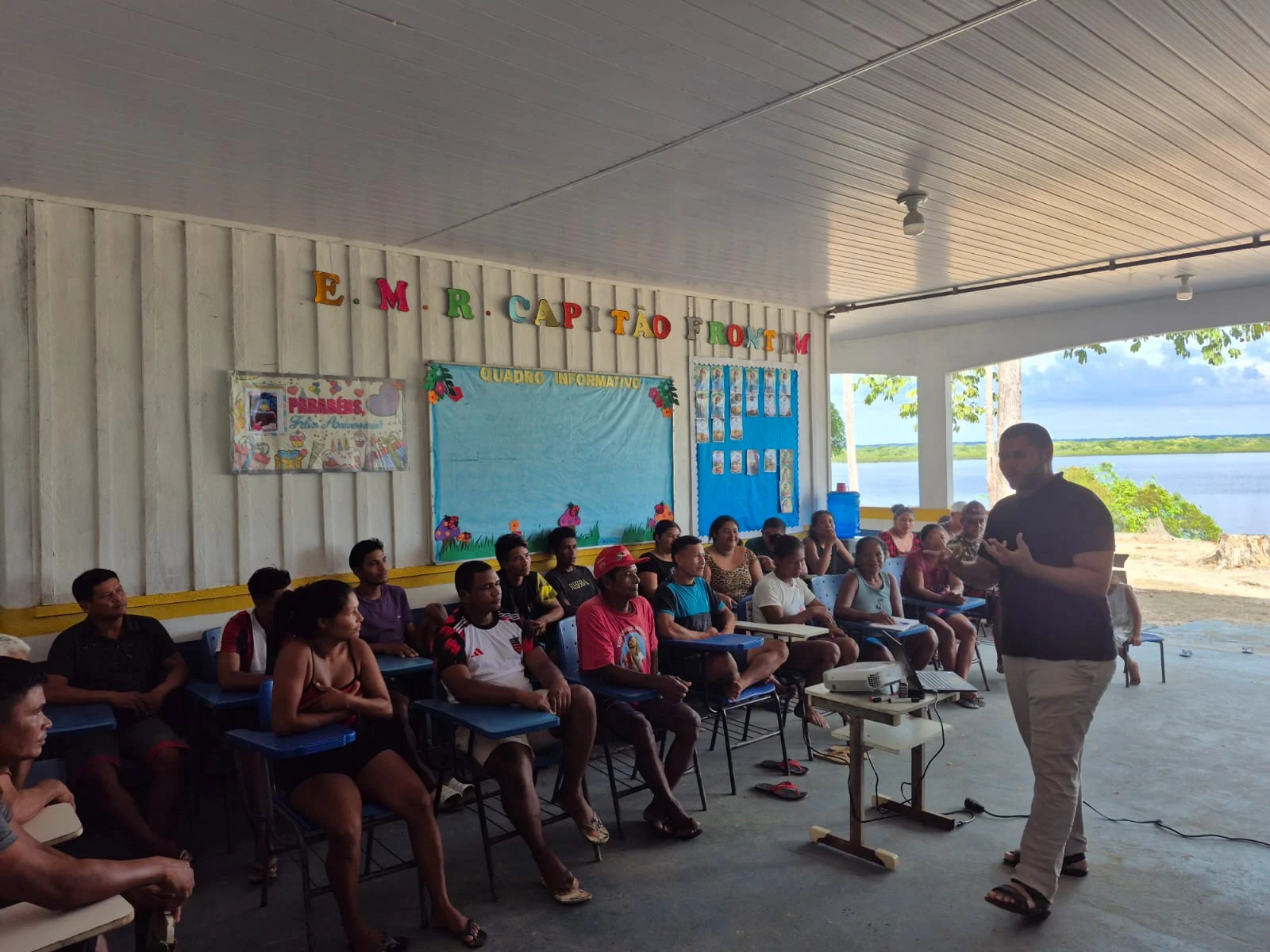
- Theoretical training session with community members.
-
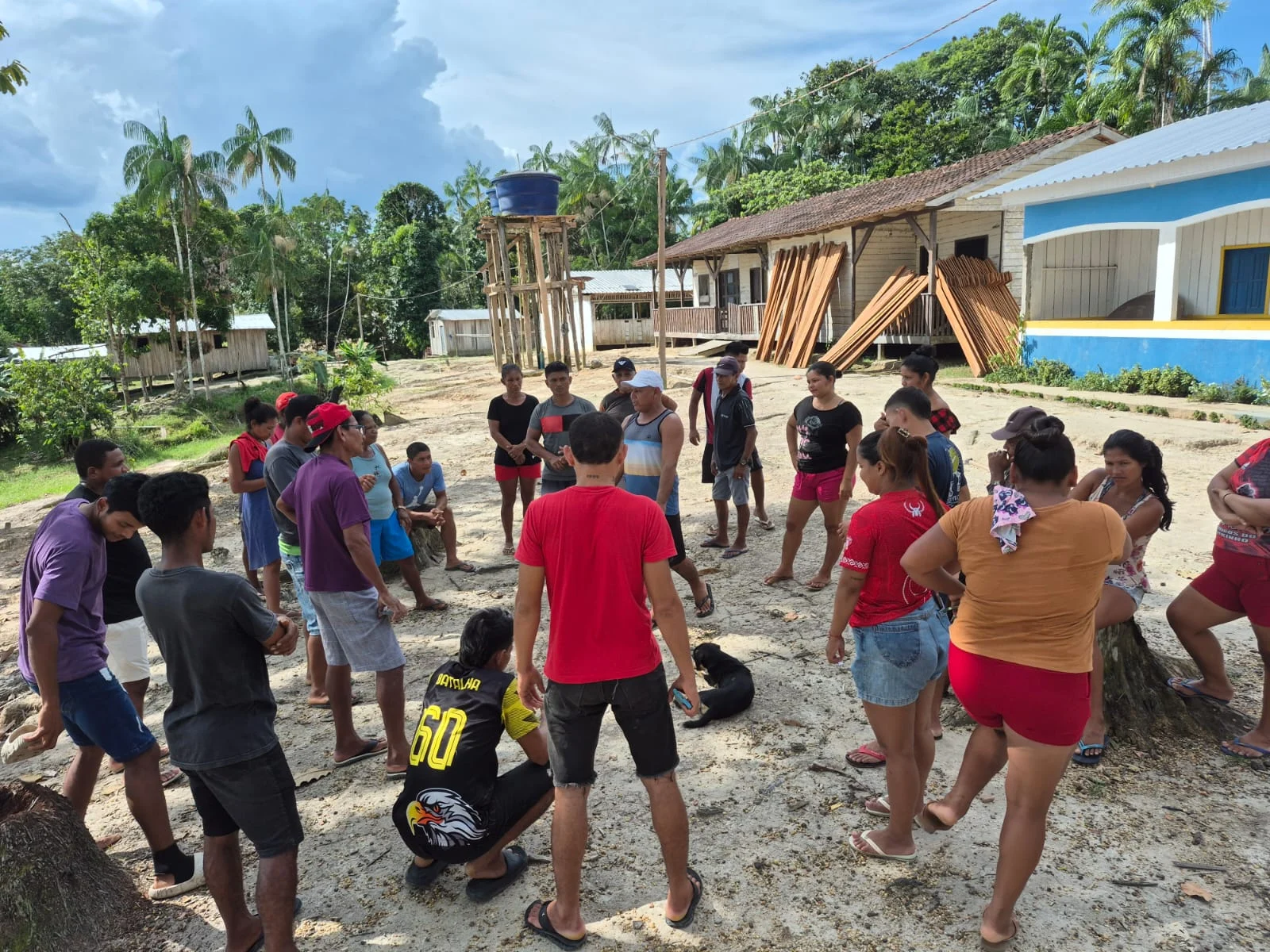
- Practical session during the community training.
-
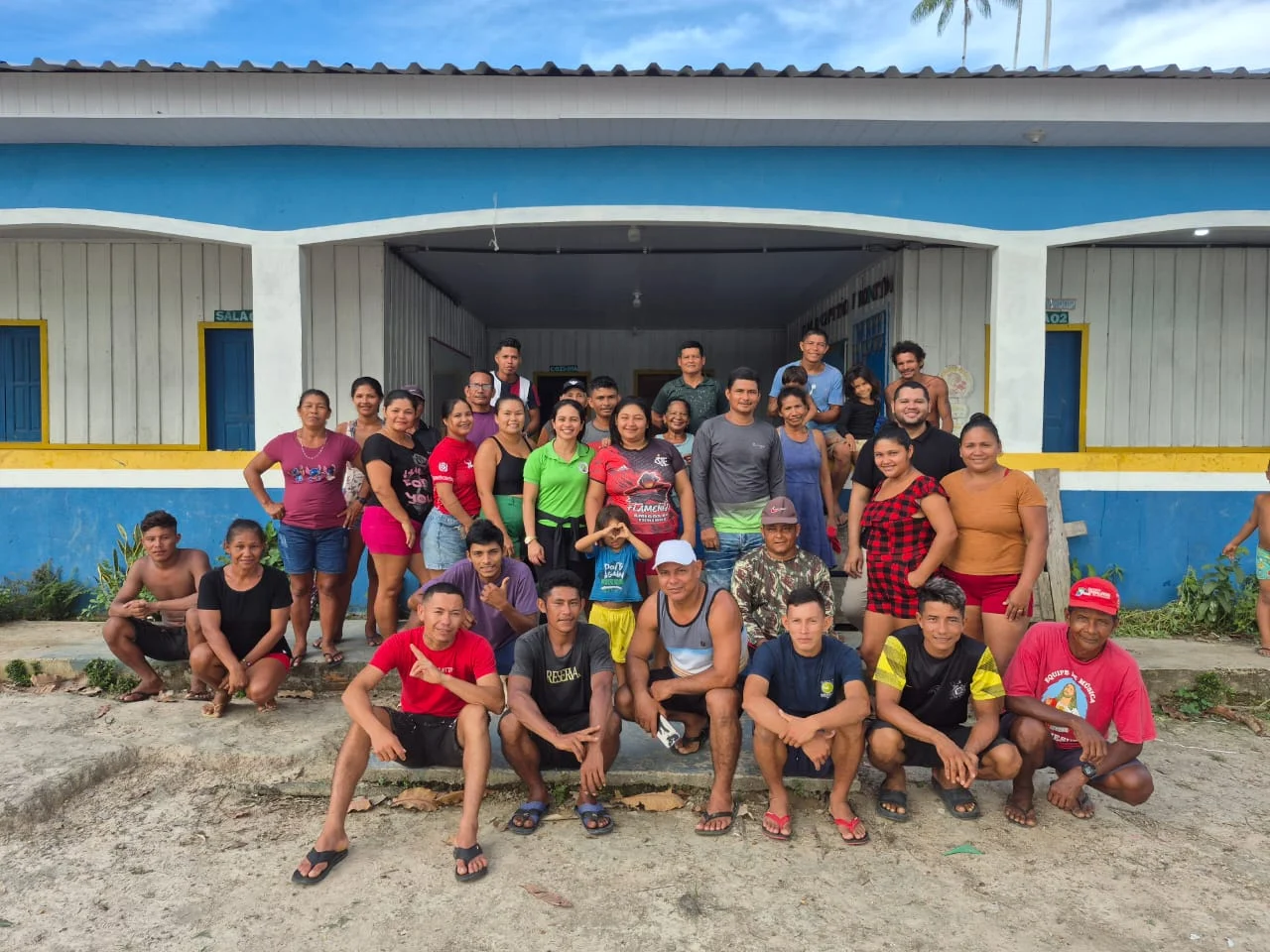
- Group of community members who participated in the training.
Preparation for the new infrastructure also includes guidance on its operation and maintenance. During the training, the community began drafting a Community Water Management Agreement, which is expected to collectively define rules for use, responsibilities for system conservation and maintenance, and decision-making arrangements.
“More than installing infrastructure to provide access to water, this intervention seeks to build, together with the families, the conditions for the community itself to participate in management and care for the system over time. The solution combines household and community structures adapted to Amazonian conditions, helping to make the water supply more secure and improve families’ quality of life,” says Adevaldo Dias, president of Memorial Chico Mendes, which is responsible for implementing the intervention.
From training to implementation
With the initial stages of mobilization, registration and training completed, the intervention is moving forward with the installation of the water supply structures. The National Water and Basic Sanitation Agency (ANA) is responsible for executing the intervention under the Amazon Basin Project, while installation of the structures in São Raimundo do Moquental is being carried out by Memorial Chico Mendes, in coordination with the Chico Mendes Institute for Biodiversity Conservation (ICMBio), the federal agency responsible for managing Brazil’s federal conservation units, and the Association of Agroextractivist Producers of Tefé National Forest (APAFE).
Community participation will continue during implementation, which will be led by specialized professionals with residents involved in the construction of the structures. In this way, the initiative seeks to link installation of the system with the development of local capacities for its operation and conservation over time.
A local response to an Amazon-wide challenge
The intervention in São Raimundo do Moquental is part of the Amazon Basin Project’s actions to strengthen resilience to climate variability and change. In this process, water supply infrastructure is combined with community training, preparing families to manage water, maintain the system and participate in decisions about its operation.
In territories where rivers and rainfall shape mobility, water supply and ways of life, extreme events such as the 2023 and 2024 droughst highlight the importance of expanding local alternatives for access to water. Regular access to quality water also contributes to families’ food and nutrition security by supporting adequate conditions for hygiene, food preparation and health.
The experience in Tefé National Forest may also contribute knowledge about solutions adapted to the Amazon’s social and environmental conditions, strengthening efforts to improve water security and the adaptive capacity of communities across the Amazon Basin.
Related news
3 de November de 2025
The Amazon Cooperation Treaty Organization (ACTO) announces a call for specialized technical services to update the Atlas of Hydroclimatic Vulnerability [...]

20 de March de 2025
On World Glacier Day, celebrated on March 21, the international community reinforces the urgency of protecting these natural reservoirs of [...]

18 de March de 2025
The glaciers of the tropical Andes are among the most sensitive to rising global temperatures, as they respond rapidly to [...]
