

Representatives from the Member Countries of the Amazon Cooperation Treaty Organization (ACTO) participated on May 13, in Brasília, in the Regional Financing Workshop: Exchange of Experiences and Financing Strategies for Integrated Water Resources Management (IWRM), held within the framework of the Amazon Basin Project (ACTO/UNEP/GEF), which implements the Strategic Action Program (SAP) for the Amazon basin.
The meeting addressed innovative financing mechanisms for water management in the Amazon, including the presentation of the Amazonian Mechanism for Cooperation and Action (MACA), experiences developed by Amazonian countries in the context of SAP implementation, and international references shared by the World Bank and the Caribbean Biodiversity Fund (CBF), including experiences from the Caribbean Blue Economy Financing (CAR BluEFin) project.
Discussions focused on financing opportunities for IWRM, lessons learned, regional cooperation mechanisms, and possibilities for sustainability, replicability, and scalability of the experiences presented. The workshop also advanced the identification of resources for implementing ACTO’s Regional Monitoring Protocols and the activities of the Amazon Network of Water Authorities (ANWA), in coordination with the MACA.
MACA: a new regional financing mechanism
During the workshop, ACTO Administrative Director Edith Paredes presented the Amazonian Mechanism for Cooperation and Action (MACA), a new regional instrument promoted by ACTO to strengthen financing for strategic programs linked to sustainable development and environmental justice in the Amazon.
The creation of the mechanism is aligned with the commitments assumed by ACTO Member Countries in the Belém Declaration and was consolidated during the summit held in Bogotá in 2025, when heads of state approved a resolution aimed at establishing a direct, flexible regional financing model suited to the needs of the Amazon. The AMCA was officially launched during COP 30, held in Belém.
The mechanism aims to mobilize US$250 million over ten years, in coordination with multilateral banks, international cooperation agencies, and other strategic partners, to finance priority regional programs. Its main functions include attracting and capitalizing non-reimbursable financial resources for projects, programs, studies, and initiatives linked to ACTO’s strategic agenda.
Edith Paredes emphasized that the mechanism’s development process included representatives from the eight member countries, who formed a working group responsible for developing AMCA’s technical proposals and governance instruments, including the bylaws of its governing board.
“MACA governance is extremely important, and there are two non-negotiable issues: transparency in the use of resources and reporting mechanisms that allow monitoring and follow-up of implementation. This is fundamental not only for mobilizing resources, but also to ensure that countries feel confident about the use, management, and implementation of these resources,” she stated.
-
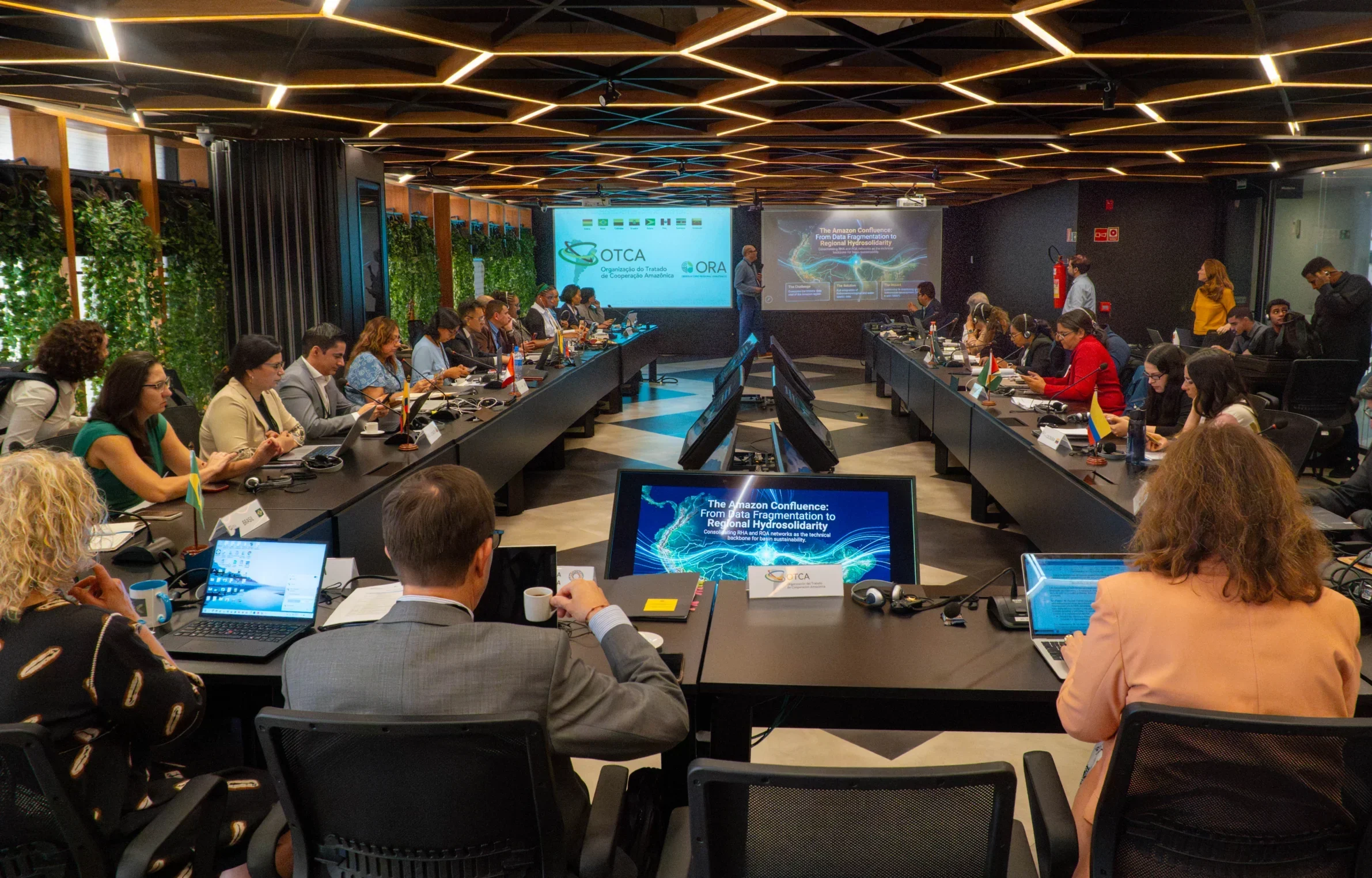
- Working sessions during the Financing Workshop held at ACTO.
-
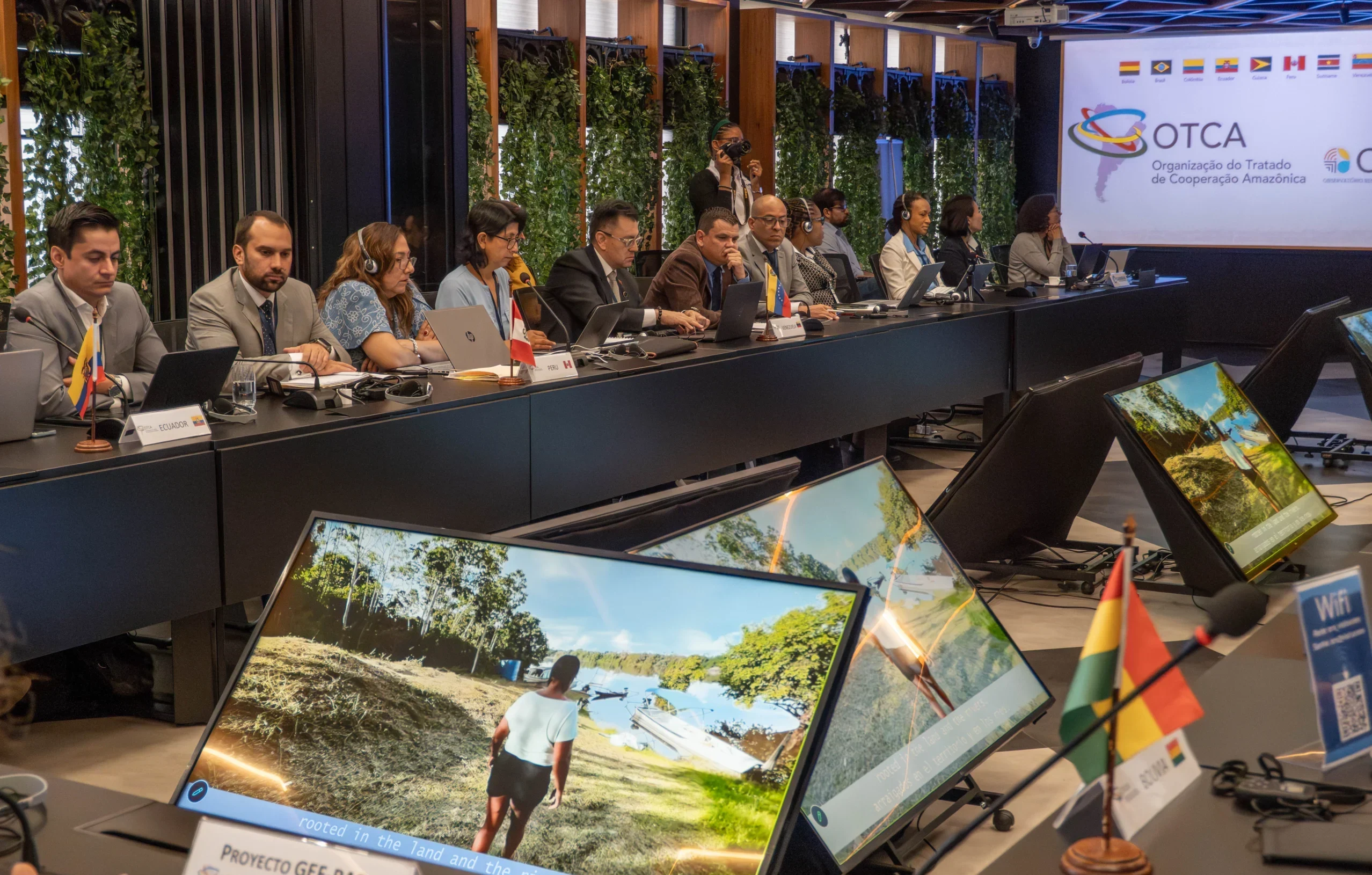
- Photos: Adriana Herrera
National experiences and innovative solutions
As part of the national interventions promoted by the Amazon Basin Project, participating countries presented experiences and innovative mechanisms aimed at strengthening financing for integrated water resources management and environmental sustainability in the Amazon region.
Brazil presented a project that combines income generation for traditional communities with the restoration of degraded areas in the region known as Terra do Meio, in the state of Pará. The initiative, completed this year, relied on a collective economic incentive mechanism designed to structure the forest seed supply chain and enabled the restoration of 50 hectares of forest, while also generating income for 312 seed collectors.
Colombia presented an experience focused on the design and implementation of a Payment for Environmental Services (PES) scheme in the Amazon-Orinoco Transition Zones (ZOTAO), aimed at improving water regulation, protecting strategic ecosystems, and strengthening sustainable production systems. The initiative seeks to integrate environmental conservation and sustainable production, covering at least 25,000 hectares. “These initiatives enable our communities in the Amazon basin to make progress in water care and conservation, as well as to strengthen the communities that live there,” said Johanna Gelvez, a specialist from the Integrated Water Resources Management Directorate of Colombia’s Ministry of Environment and Sustainable Development.
Ecuador shared an innovative experience linked to the implementation of a Water Fund for the protection and conservation of water sources in the Amazon Basin. The initiative includes the establishment of a national legal and regulatory framework to promote synergies among existing water funds in the Amazon region, as well as the implementation of an interconnected local and regional system to foster joint water conservation actions.
Suriname presented the “Blue Forests for the Blue Economy” initiative, based on the implementation of a financing mechanism for mangrove and coastal restoration. The intervention benefits around 2,500 people and includes the offering of carbon credits in the voluntary market, with the potential to generate income for communities linked to 800 hectares of production.
Participants agreed that the experiences presented constitute important inputs for strengthening IWRM financing and the sustainability of actions promoted under the Amazon Basin Project.
-
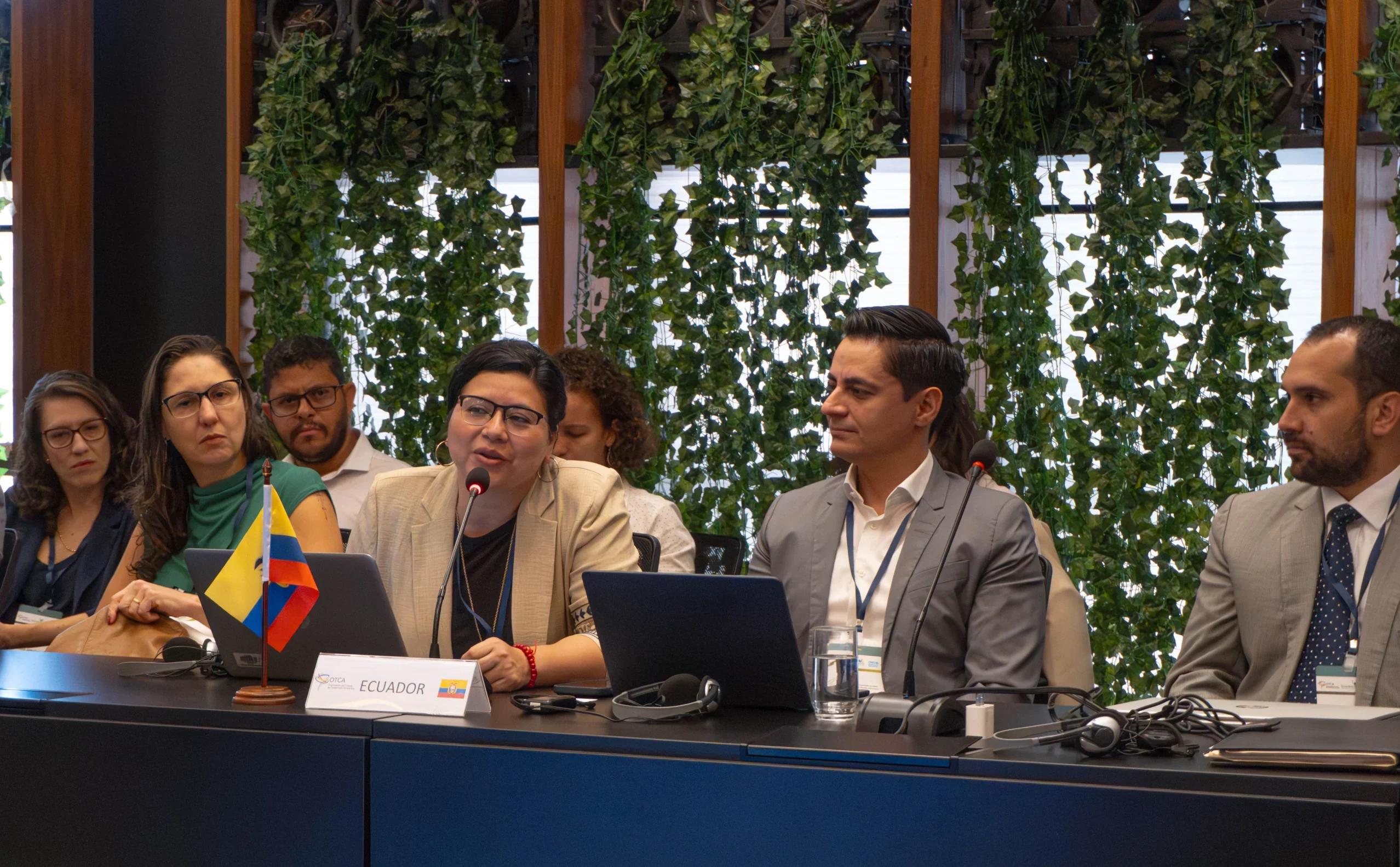
- Delegation of Ecuador during its presentation on the implementation of a Water Fund for the protection and conservation of water sources in the Amazon Basin.
-
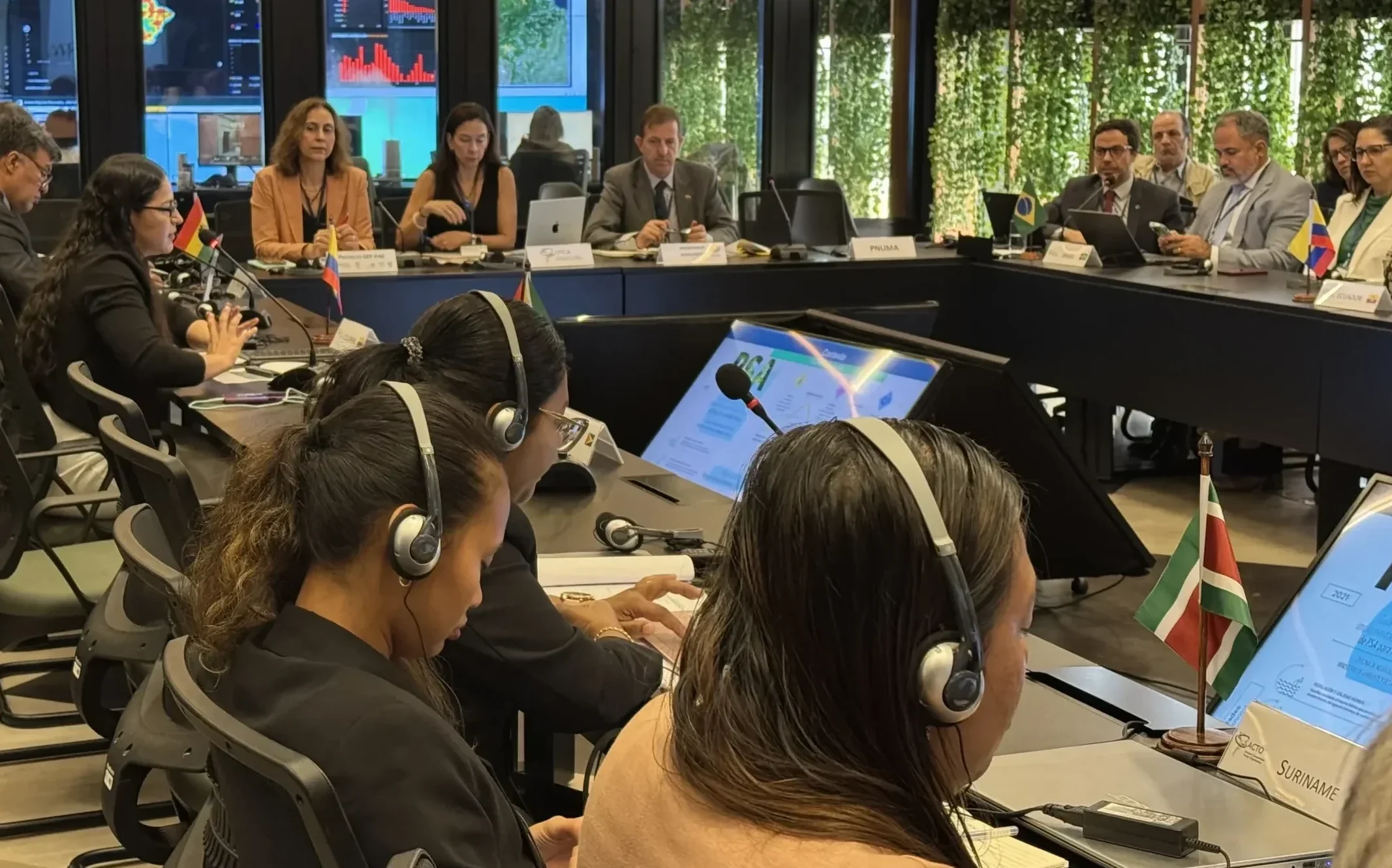
- Delegation of Colombia during the presentation of an experience focused on the design and implementation of a Payment for Environmental Services (PES) scheme in the Amazon-Orinoco Transition Zones (ZOTAO).
Regional cooperation and financing for monitoring
The workshop also highlighted the exchange of experiences between the Amazon Basin Project and the Caribbean Biodiversity Fund (CBF), including initiatives linked to the Caribbean Blue Economy Financing (CAR BluEFin) project, considered an innovative example of regional financing for conservation and sustainable development.
The World Bank, in turn, shared national and regional experiences regarding innovative financial mechanisms for IWRM, with emphasis on financing strategies for environmental monitoring systems and the strengthening of strategic partnerships.
Financing for regional monitoring
Within the framework of the activities of the Amazon Network of Water Authorities (ANWA), country representatives contributed inputs for the development of a project concept aimed at mobilizing international financing for the implementation of the Regional Monitoring Protocols.
At the close of the workshop, Isabelle Vanderbeck, UNEP Task Manager, highlighted the importance of taking advantage of opportunities created by initiatives such as MACA, the Caribbean Biodiversity Fund (CBF), and the CAR BluEFin project to strengthen a regional ecosystem of sustainable financing for the Amazon. According to Vanderbeck, the articulation among the mechanisms presented during the meeting has the potential to elevate the conservation and sustainable management of Amazonian water resources “to a new level through sustainable, long-term financial instruments.”
