

In April, communities and institutions from the transboundary region between Leticia (Colombia) and Tabatinga (Brazil) took another step toward strengthening the protection of the groundwater that supplies both Amazonian cities. As part of an intervention of the Amazon Basin Project (ACTO/GEF/UNEP), implemented since 2022 with the support of Colombia’s Ministry of Environment and Sustainable Development (MinAmbiente) and Brazil’s National Water and Basic Sanitation Agency (ANA), they participated in a participatory monitoring workshop and field activities aimed at strengthening local capacities for the sustainable management of the shared aquifer.
The intervention was centered on the Hydrogeological, Vulnerability and Risk Assessment for the Development of Groundwater Protection and Use Policies in the Transboundary Region of Leticia (Colombia) and Tabatinga (Brazil), carried out by the Amazon Basin Project. The study included an assessment of water supply wells located in households, schools, clubs and other institutions across the region. It confirmed that, although groundwater availability is sufficient to meet the population’s needs, water quality varies significantly. The assessment also identified wells affected by contamination, mainly associated with inadequate basic sanitation, as well as areas that are highly vulnerable to contamination. These findings highlighted the need to strengthen community-based monitoring, environmental education and continuous actions to protect the shared aquifer.
The study results provided the basis for the next phase of the intervention. Between April 18 and 27, the Project organized a theoretical and practical workshop together with participatory monitoring field activities in communities and institutions that rely on groundwater. Conducted in coordination with MinAmbiente and ANA, these activities aimed to strengthen local capacities to assess water quality, interpret monitoring results and adopt good practices for protecting the shared aquifer.
-
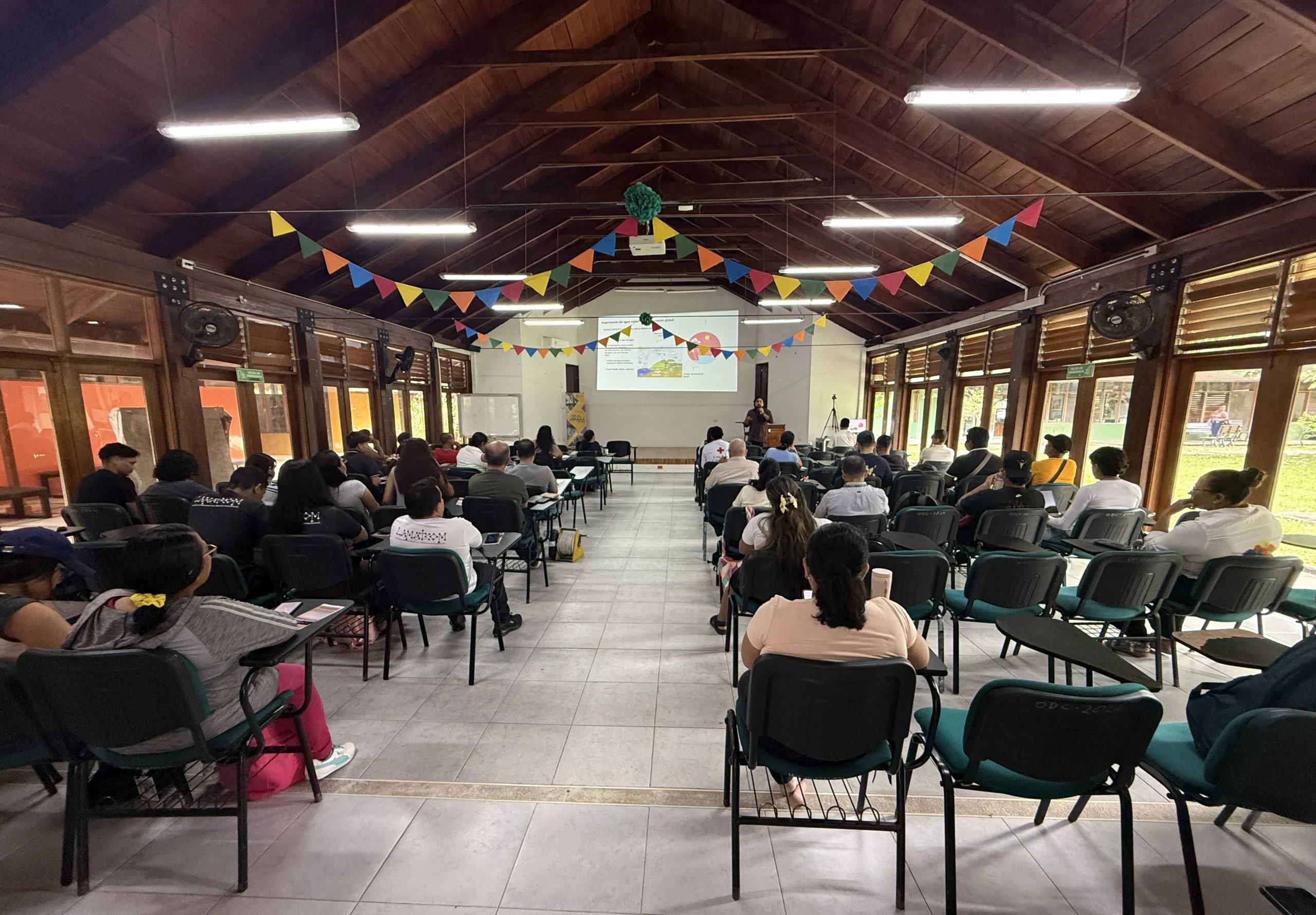
- Taller realizado en los
-
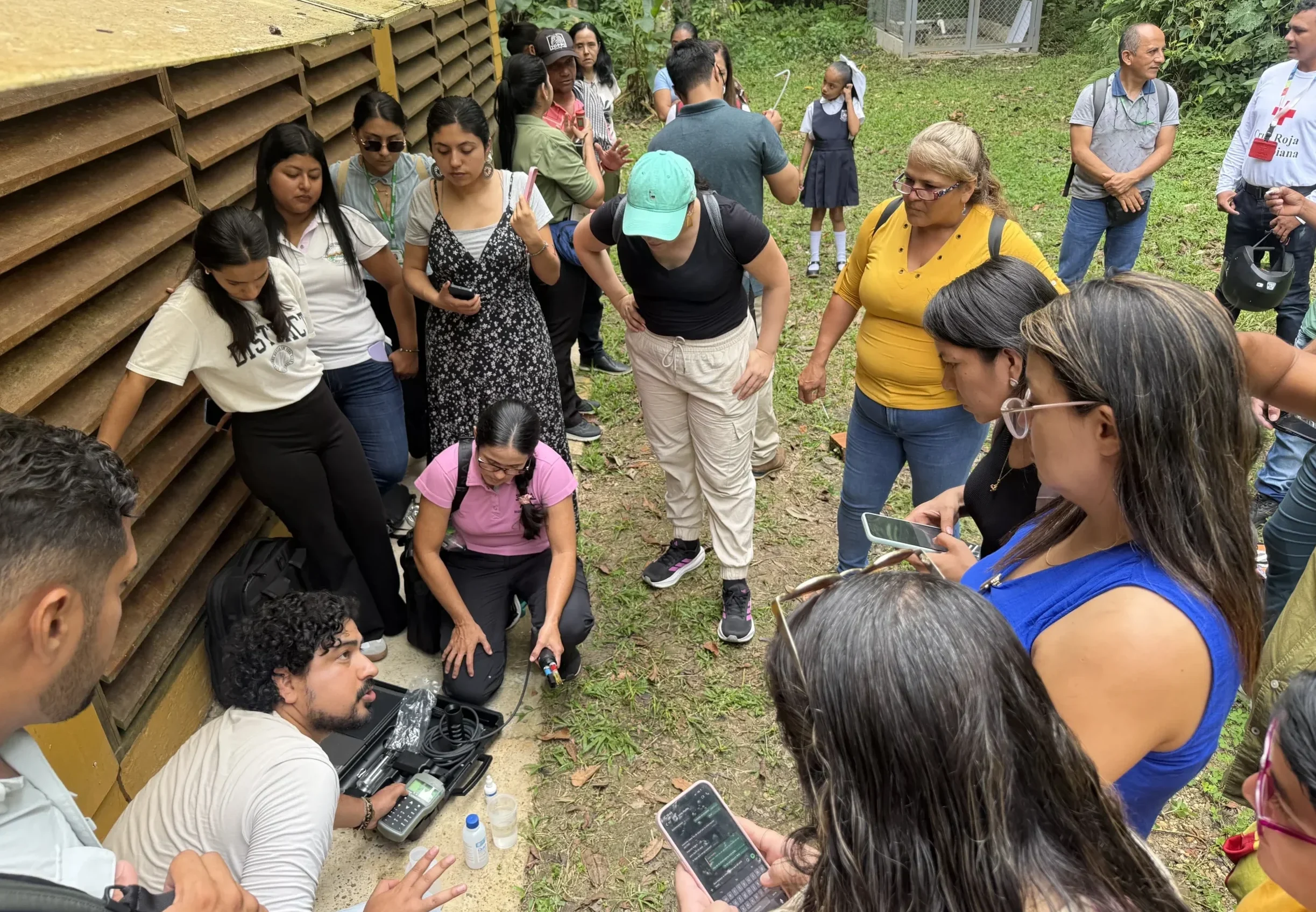
- Jornada de monitoreo llevadas a cabo en la Universidad Nacional de Colombia en Leticia
Capacity building and field monitoring
Held at the National University of Colombia – Amazon Campus, in Leticia (Colombia), the workshop sought to strengthen local capacities for community-based monitoring of the groundwater shared by Leticia and Tabatinga. The programme combined theoretical sessions, participatory activities and hands-on monitoring exercises, during which community members, institutions and groundwater users learned how to use water level probes to measure groundwater depth, test strips and field equipment to assess key water quality parameters on site.
Participants then applied these techniques to water supply wells located in registered households and institutions, where they carried out measurements, interpreted the results and reinforced good practices for protecting both the wells and the shared aquifer.
For many families, this was the first opportunity to better understand the quality of the water they consume every day. “We have a storage tank for drinking water and cooking, but we didn’t know whether the water was contaminated or not. Now, at least, we have tested it and have more information to help us take better care of it,” said Olga Oliveros, a resident of Leticia.
The workshop also brought together community and Indigenous leaders interested in sharing this knowledge with other communities. “For a long time, we have consumed water without knowing its quality. Today I am taking home knowledge that I can share with other Indigenous communities so that we can better protect our groundwater,” said Manuel Morales, an Indigenous leader from Murui community. The monitoring carried out in the wells of his community also yielded important lessons. “Of the four wells we assessed, three showed negative results and only one tested positive. For us, this is a warning that we need to be more careful and find better ways to manage our water,” added Manuel Manuiama, also a leader of the murui community.
The initiative also attracted interest on the Brazilian side of the border. José Pereira, a participant from Tabatinga, pointed out that many residents rely on well water without knowing its quality and expressed his hope that this training will also reach local governments and the university so they can help raise public awareness about groundwater protection.
Beyond the practical tools and knowledge acquired, the experience also changed the way many participants perceive groundwater. “Many people believe that because groundwater is underground, it is automatically clean and safe for human consumption. This experience showed us that it is also a finite resource and that we all have a responsibility to help conserve it,” said Libaniel Echeverry, a workshop participant.
-
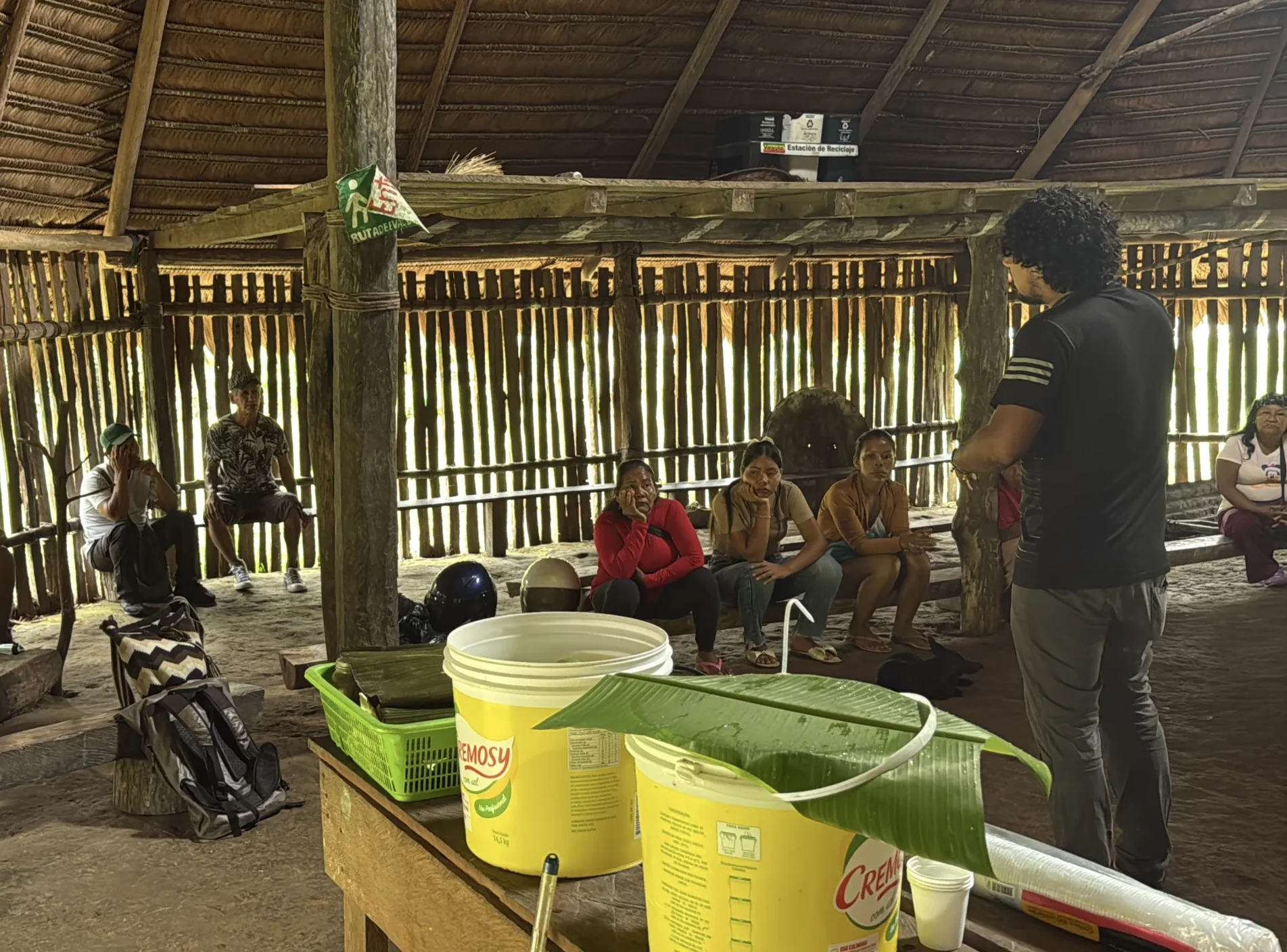
- Actividad de monitoreo participativo de aguas subterráneas realizada en la comunidad indígena murui, en Leticia.
-
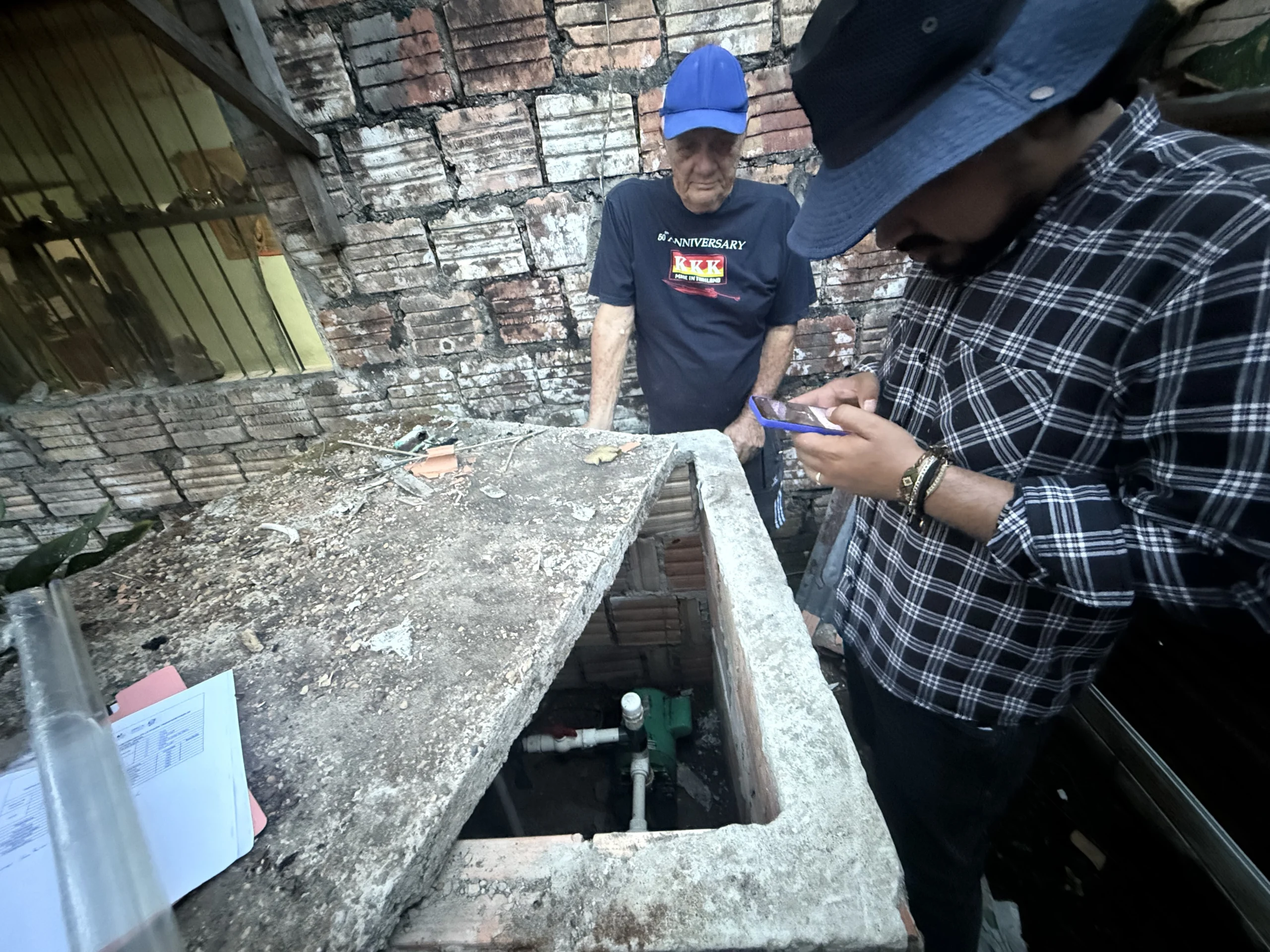
- Medición de parámetros de calidad del agua en el pozo de abastecimiento de Libaniel Echeverry, participante de Leticia.
-
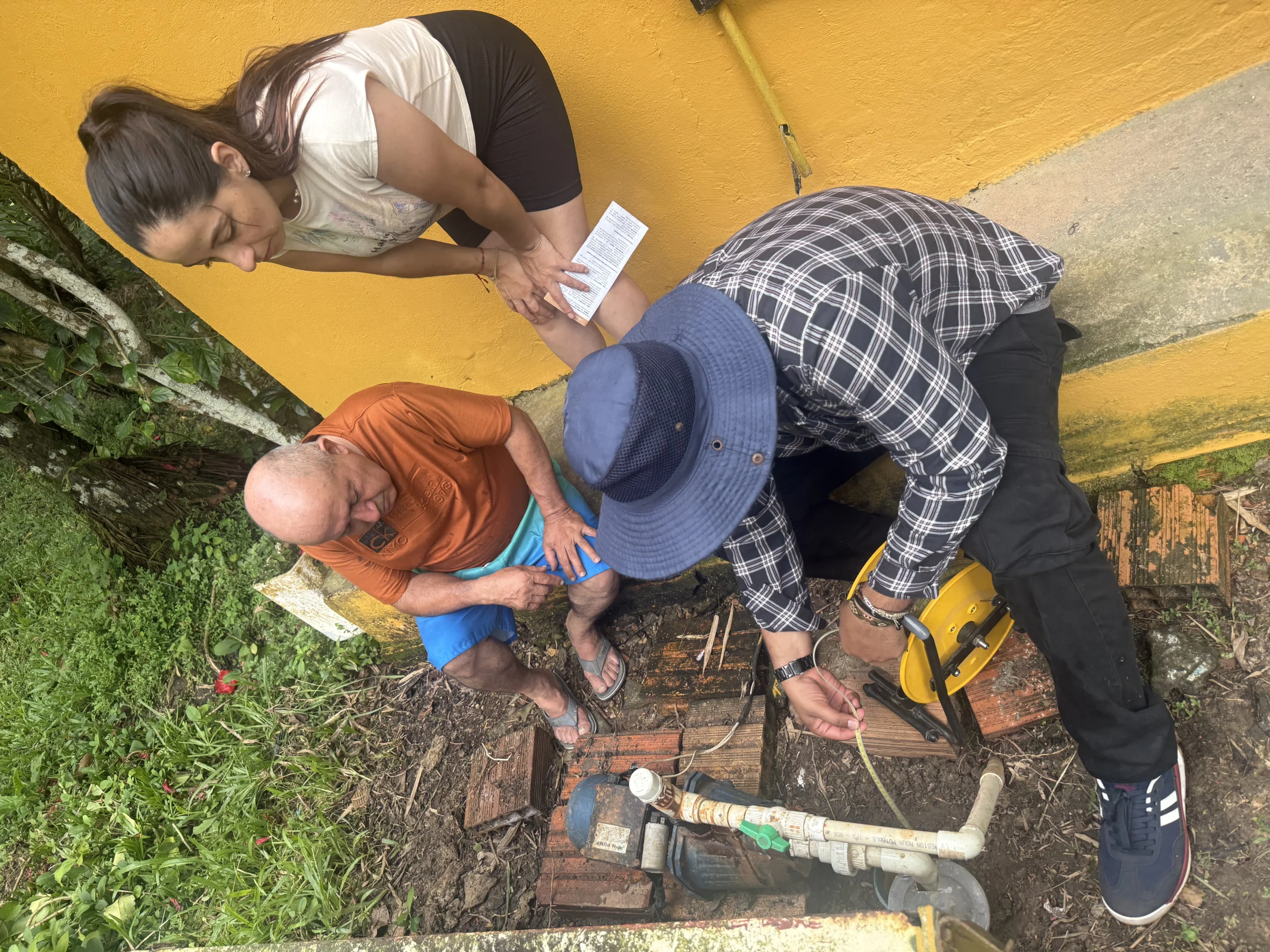
- Medición de parámetros de calidad del agua en el pozo de abastecimiento de Libaniel Echeverry, participante de Leticia.
To ensure the continuity of community-based monitoring, participants received groundwater monitoring kits and the Practical Guide for Participatory Groundwater Monitoring in the Transboundary Region between Leticia (Colombia) and Tabatinga (Brazil), developed under the Amazon Basin Project. The guide provides methodological guidance to help communities monitor groundwater conditions in their wells, record groundwater level and rainfall variations, and carry out basic measurements of key water quality indicators.
Community monitoring to protect the shared aquifer
The initiative aims to lay the foundation for the implementation of a participatory monitoring network in the transboundary region between Leticia and Tabatinga, fostering a more active role for communities in monitoring and protecting groundwater resources.
In addition to expanding knowledge about groundwater quality and availability in the region, the process also contributes to strengthening regional cooperation and reinforcing community engagement in protecting a resource that is essential for water security in the Amazon.
The exchange also inspired younger generations.“It was very interesting to understand how water systems work in the transboundary region between Leticia and Tabatinga. I am taking away very valuable knowledge from this experience and from all the activities we carried out,” said João Leandro Carvajal, a student at José Eustasio Rivera School in Leticia.
Related news
23 de September de 2026
Communities from six locations in the Putumayo and Amazon River basins in Colombia participated in the development of a community-based [...]
11 de September de 2026
With support from the Amazon Basin Project – Implementation of the Strategic Action Program (SAP), Ecuador declared the Nueva Esperanza [...]
9 de September de 2026
A process built around the realities and needs of Guyana and Suriname seeks to strengthen the foundations for Integrated Water [...]
