


The Amazon Cooperation Treaty Organization (ACTO) participated in the 11th Biennial Global Environment Facility (GEF) International Waters Conference (IWC11), held from 17 to 22 October 2026 in Bali, Indonesia. The event brought together representatives of governments, international organizations, and GEF-funded projects to share experiences and discuss solutions for the sustainable management of transboundary waters.
Under the theme “Shared Waters, Transformative Solutions: Enabling Systems Change,” the conference addressed the challenges of cooperation among countries, strengthening governance, and ensuring the sustainability of results achieved by international waters projects.
-
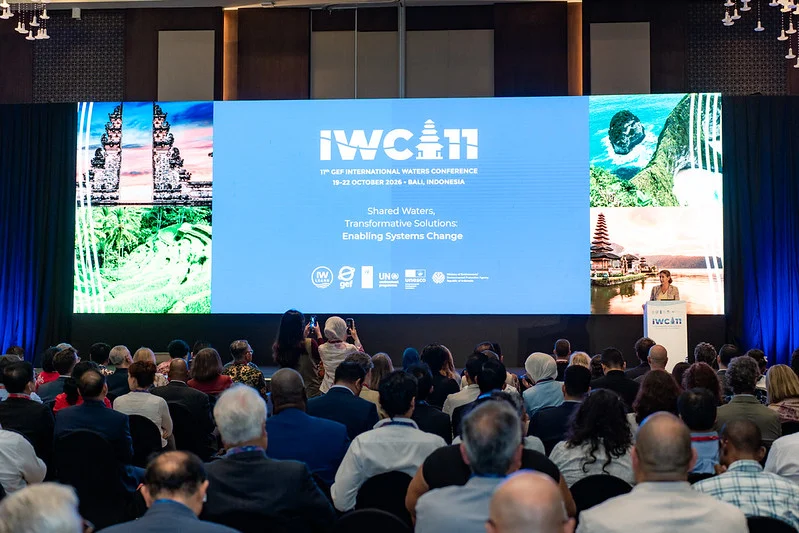
- Day 1 of IWC11: “Shared Waters, Collective Knowledge: Scalable and Replicable Solutions for a Changing Future.” Photo: Triple E / IW
-
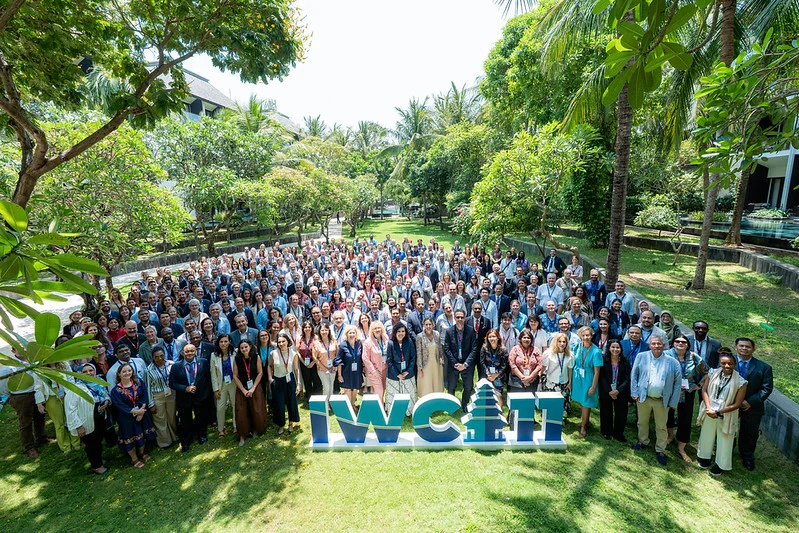
- More than 300 participants gathered at IWC11 in Bali, Indonesia. Photo: Triple E / IW
ACTO was invited to share its experience in regional cooperation for Amazon water management during the workshop “Building Blocks for Effective Transboundary Freshwater Cooperation and Basin Management,” held on 21 October. The session brought together experiences from different regions of the world to discuss how to overcome institutional barriers and ensure the continuity of cooperation beyond project funding cycles.
The Organization was represented by Edith Paredes, ACTO’s Administrative Director, and Maria Apostolova, Regional Coordinator of the Amazon Basin Project (ACTO/UNEP/GEF), which implements the Strategic Action Programme (SAP) for Integrated Water Resources Management in the Amazon Basin.
In complementary presentations, both speakers addressed progress in cooperation among the eight Member Countries and the development of a permanent coordination mechanism for Integrated Water Resources Management (IWRM), whose establishment is one of the main institutional legacies of the Amazon Basin Project.
Institutional Cooperation and the White Paper on Water
Edith Paredes presented the evolution of Amazon cooperation, from the signing of the Amazon Cooperation Treaty in 1978 to the commitments made in the Belém and Bogotá Declarations, which have driven ACTO’s institutional strengthening and the expansion of its regional agenda.
In this context, she highlighted the Amazon Network of Water Authorities (ANWA), established in 2023 with support from the Amazon Basin Project, as a permanent coordination mechanism among the national authorities responsible for water resources management in the eight countries.
The Director emphasized the Network’s rotating presidency, initially held by Bolivia and currently by Brazil, as well as its role in facilitating political dialogue and technical cooperation, guided by an action plan for the next two years.
Among recent achievements, she highlighted the adoption of the White Paper on Water on 8 October 2026, during the Sixth Extraordinary Meeting of ANWA, held in Brasília. The document establishes guidelines for developing a permanent regional cooperation mechanism for IWRM within ACTO, with the Network itself serving as its institutional core.
Edith also mentioned the Regional Protocols for Water Quantity and Quality Monitoring, information exchange, and the strengthening of technical capacities among Amazon countries as instruments for implementing the regional agenda.
Addressing the continuity of regional cooperation, Edith emphasized that ANWA provides an institutional structure capable of advancing the shared water management agenda beyond the implementation cycles of international cooperation projects. She also underscored the importance of strengthening partnerships to address the region’s challenges. “We cannot move forward alone. We will always need to strengthen cooperation and partnerships,” she stated.
-
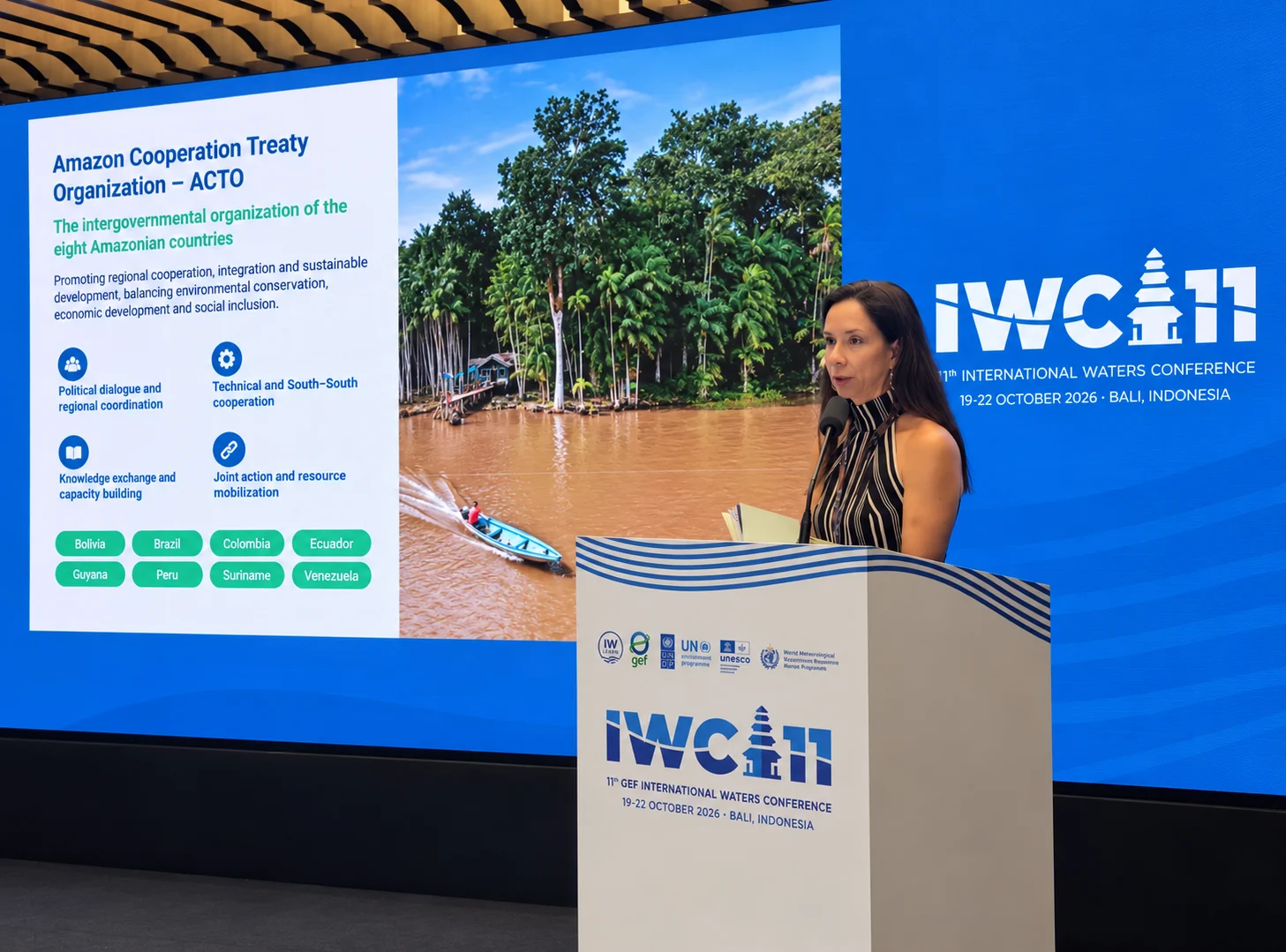
- Edith Paredes, ACTO Administrative Director, during her presentation at IWC11. Photo: Amazon Basin Project
-
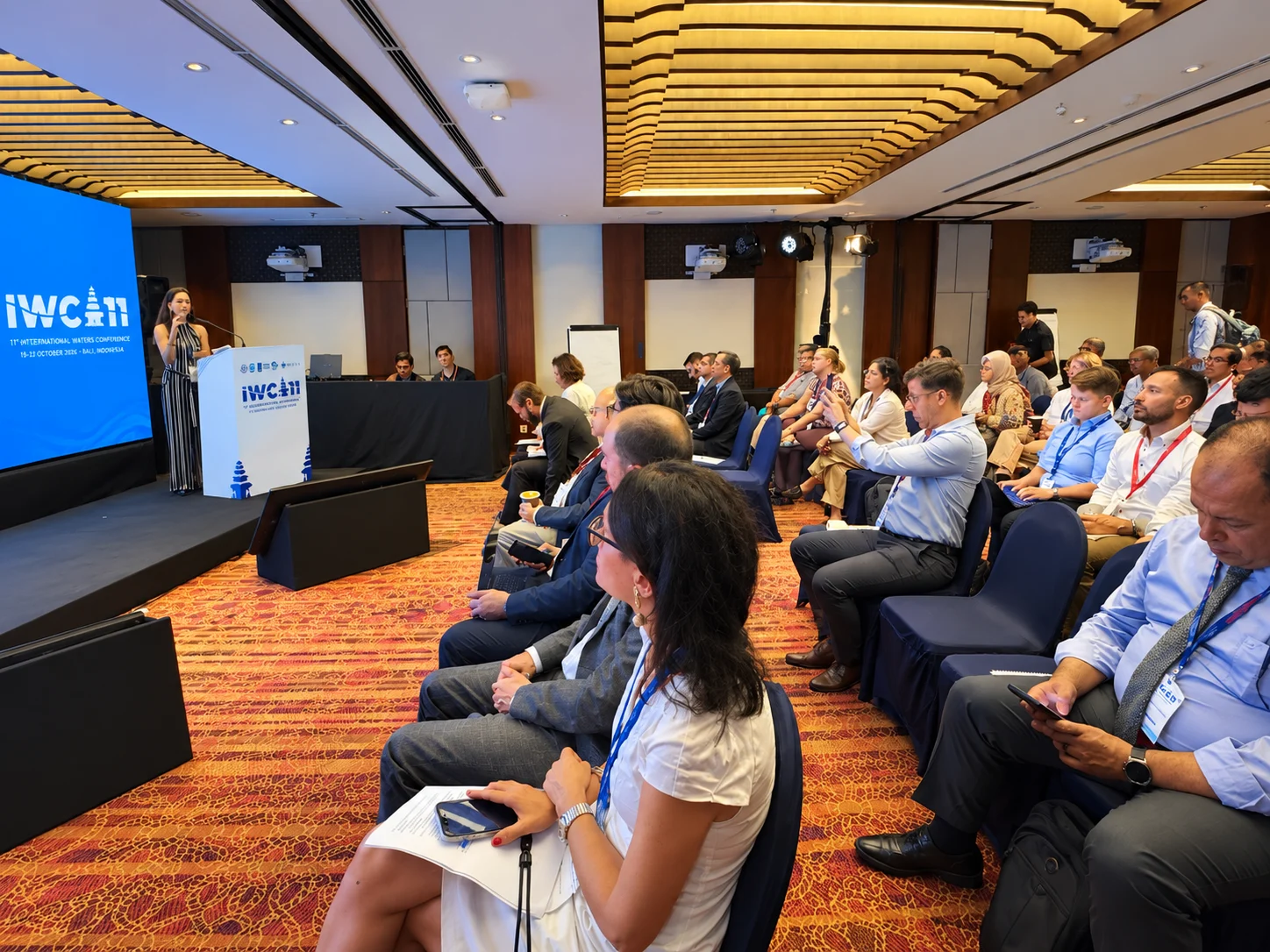
- Edith Paredes highlights progress in regional cooperation for Amazon water management. Photo: Amazon Basin Project
-
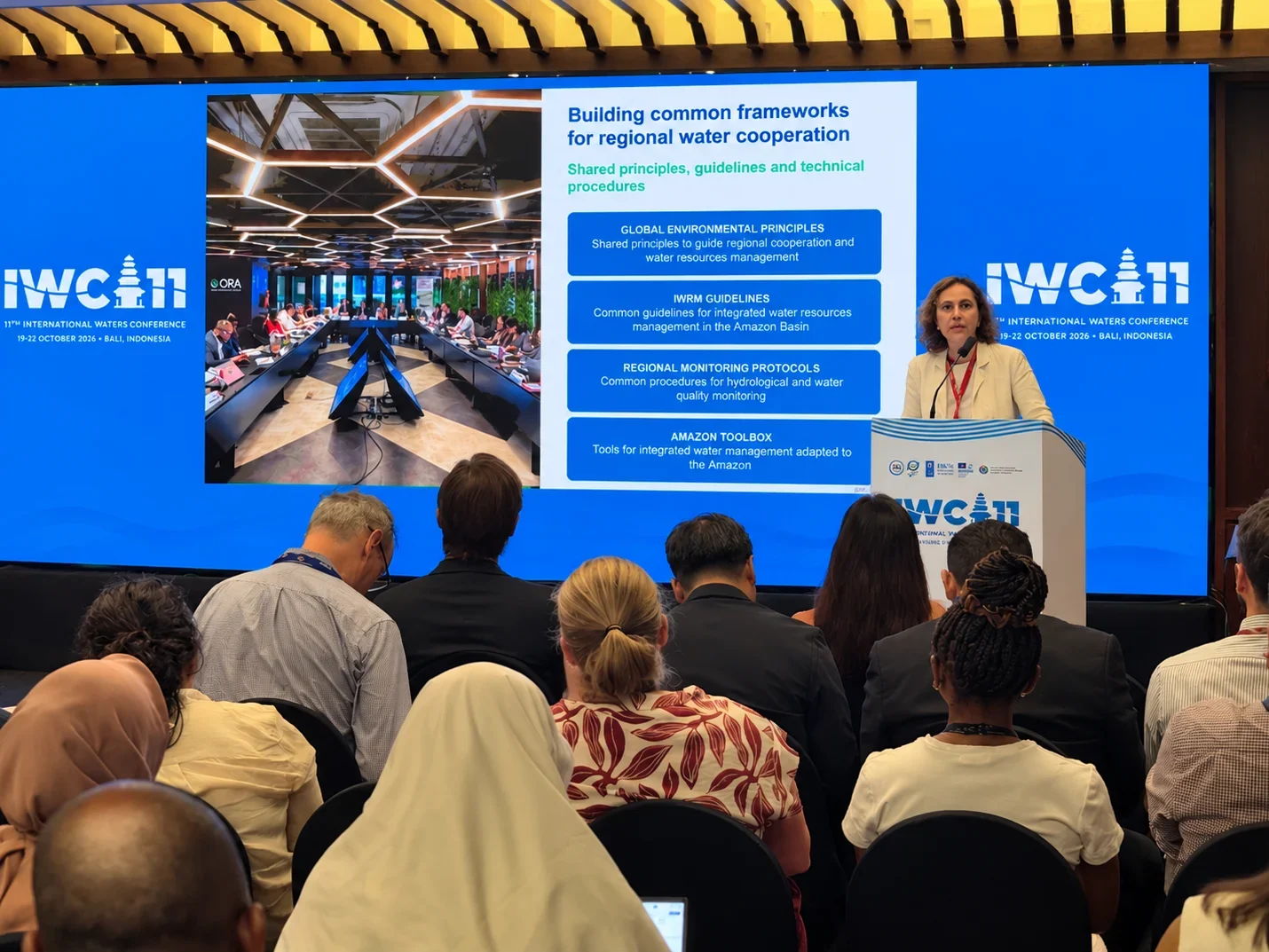
- Maria Apostolova presents the results and legacies of the Amazon Basin Project. Photo: Amazon Basin Project
From the Strategic Action Programme to Permanent Cooperation
Maria Apostolova presented the results of SAP implementation through the Amazon Basin Project, highlighting how a transboundary diagnostic assessment and a shared regional vision have been translated into cooperation instruments and technical capacities jointly developed by the eight countries.
Achievements presented included the strengthening of the Amazon Regional Observatory (ARO), hydrological and water quality monitoring networks, data exchange and interoperability mechanisms, and the development of common management frameworks, including environmental principles, regional IWRM guidelines, and the Amazon Basin Integrated Water Resources Management Toolbox.
The Regional Coordinator emphasized that these results provide the technical and institutional foundations for establishing a permanent IWRM coordination mechanism within ACTO, with RADA serving as the central platform for coordination among countries.
As presented by Maria, the mechanism will bring together four interdependent dimensions — information, sustainability, participation, and institutional strengthening — with the aim of ensuring the continuity of regional cooperation after the Project’s completion.
In this process, the White Paper on Water represents an institutional milestone by establishing shared guidelines for developing the mechanism, linking countries’ political commitments with the technical instruments developed during SAP implementation.
The experience presented at IWC11 demonstrated how political coordination among Amazon countries within ACTO, combined with the development of technical instruments and knowledge sharing, contributes to consolidating the foundations for lasting cooperation in transboundary water management. In this context, the development of a permanent IWRM coordination mechanism represents a fundamental step towards ensuring the continuity and strengthening of this cooperation.
Related news
October 14, 2026
Water authorities from eight Amazonian countries adopt strategic framework to guide the implementation of a permanent water management mechanism
The water authorities of the eight Member Countries of the Amazon Cooperation Treaty Organization (ACTO) adopted the Water White Paper on October 8, a strategic framework that establishes the foundations [...]
September 25, 2026
Amazon countries launch series of workshops to integrate water, food, energy and ecosystems into Amazon Basin management
Colombia launched, in late July, the series of National Nexus WEFE Workshops to be held across the eight Member Countries of the Amazon Cooperation Treaty Organization (ACTO). Following Bogotá, the [...]
September 23, 2026
Communities in the Putumayo and Amazon Basins Advance Aquatic Ecosystem and Fisheries Monitoring
Communities from six locations in the Putumayo and Amazon River basins in Colombia participated in the development of a community-based monitoring system to generate information on fisheries, aquatic ecosystem conditions, [...]
