

Communities from six locations in the Putumayo and Amazon River basins in Colombia participated in the development of a community-based monitoring system to generate information on fisheries, aquatic ecosystem conditions, and socioeconomic aspects related to fishing activities. The system is currently undergoing its final technical adjustments before implementation in the participating communities.
The initiative was developed within the framework of the Amazon Basin Project – Implementation of the Strategic Action Programme (ACTO/UNEP/GEF) and implemented by Colombia’s Ministry of Environment and Sustainable Development (MinAmbiente), in partnership with the Amazonian Institute for Scientific Research (SINCHI).
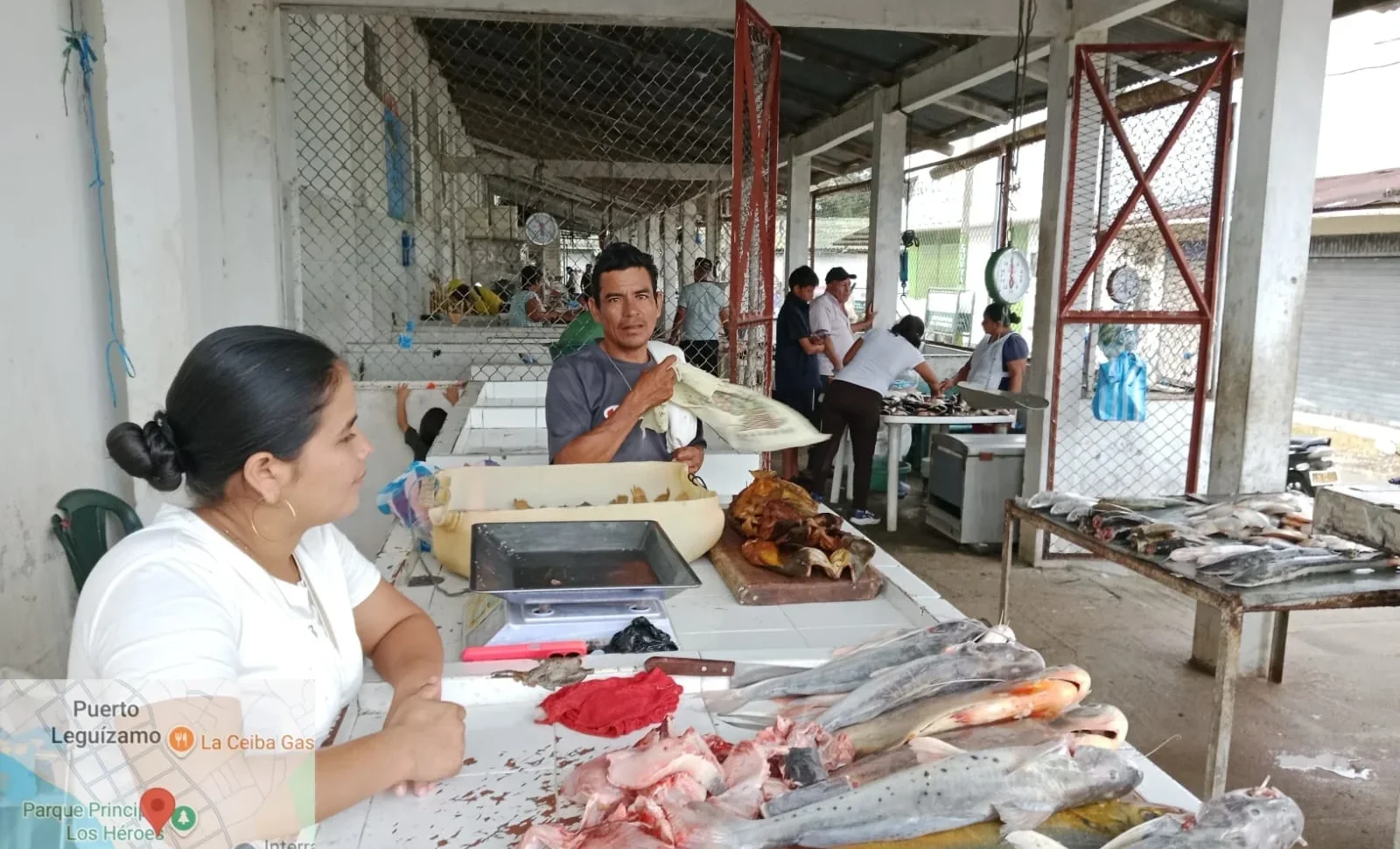
Comercialización de pescado en el mercado de Puerto Leguízamo, una de las localidades participantes en el sistema de monitoreo comunitario de ecosistemas acuáticos y de la pesca.
Monitoring to Understand and Manage
The monitoring process was developed at six sites representing different environments and social contexts: Caucayá and Leguízamo, in the municipality of Puerto Leguízamo; Playa Rica–Brisas del Hong Kong and the Perla Amazónica Peasant Reserve Zone, in Puerto Asís; Tarapoto, in Puerto Nariño; and communities in the Yahuarcaca lake system, in Leticia.
Fishers, farmers, Indigenous communities, settlers, and women monitors participated in the process. Through participatory meetings and exercises, 11 indicators — five socioeconomic and six eco-environmental — were identified by the communities as relevant to fisheries management.
The socioeconomic indicators record catches of commercial and subsistence fish below the legally established minimum sizes, price variations, catch composition, household fish consumption, and catch per unit effort, which relates the amount of fish caught to the effort involved in fishing activities. The environmental indicators monitor water temperature, pH, electrical conductivity, dissolved oxygen, the presence of contaminants, and the occurrence of non-native or exotic fish species.
“Community-based monitoring systems enable communities themselves to generate information on the state of the ecosystems and resources on which they depend, and allow that information to contribute to decision-making and the generation of alerts at the local level. To ensure that these systems are sustainable and effective, it is essential to maintain continuous data collection, technical support, and feedback on the results,” explains César Bonilla of the SINCHI Institute, director of the intervention.
During the participatory meetings, communities identified problems and changes observed in aquatic environments, including variations in river and stream levels associated with climate change; the presence of contaminants, particularly plastics and hydrocarbons; changes in fish abundance and reproductive periods; and the loss of natural characteristics of water bodies.
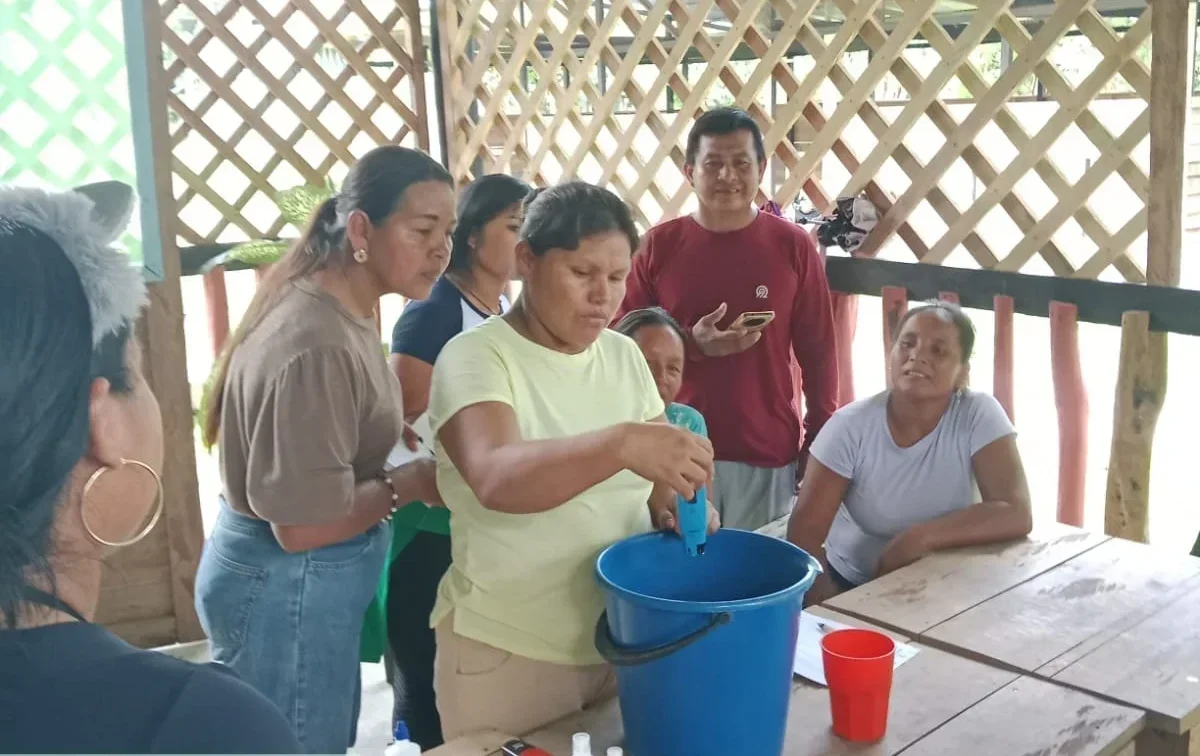
Mujeres del Sistema Lagunar de Tarapoto participan en una capacitación para el monitoreo de parámetros de calidad del agua, como parte del sistema de monitoreo comunitario de ecosistemas acuáticos y de la pesca.
According to Lilia Java, a member of the Women Weavers of Knowledge Collective of the Tarapoto Lake System, monitoring has made it possible to observe tangible changes in fisheries. “We have found that our fish are becoming smaller,” she says. She also explains that fishing trips have become longer and may now require eight, ten, or more hours to obtain a good catch.
Monitoring makes it possible to systematically record this and other information collected in the field, allowing comparisons to be made over time.
From Information to Fisheries Management
The goal is for the data generated through monitoring to support the management of fisheries resources and aquatic ecosystems. In 2026 and 2027, the SINCHI Institute will be responsible for maintaining the database and analyzing the information generated by the system.
The results will belong to the participating communities, which will decide, through prior authorization, which institutions may access the information. These may include regional autonomous corporations, departmental or municipal environment and agriculture departments, and the fisheries authority.
As the system is still evolving and being implemented, sufficient data will need to be collected to establish trends, generate alerts, and guide measures. SINCHI estimates that at least one year of continuous information is required to establish a baseline for comparative analysis.
For the communities, the information generated can also provide a basis for concrete decisions on fisheries and their territories. Lilia explains that the data can help review fishing agreements, protect areas that are important for fish reproduction, or identify alternatives to help recover declining populations.
“What are we going to do if, for example, a species no longer appears as it normally did? Are we going to reduce the use of non-traditional fishing gear? Are we all going to comply with fishing agreements and impose sanctions when they are not respected? Are we going to identify an area to restore or conserve so that our fish populations can recover?” she asks.
For Lilia, these decisions are directly related to community food security and sovereignty: “The idea is to promote the food sovereignty of our population in our territory.”
In Puerto Leguízamo, members of the Leguízamo Fishers’ Association (ASODORADO) have identified the need to establish administrative measures with the National Aquaculture and Fisheries Authority (AUNAP) to strengthen fisheries regulation and management in the region. Because such measures require reliable and systematic information on the status of fisheries resources, the association sees the monitoring system as an opportunity to generate technical information that can support future decisions.
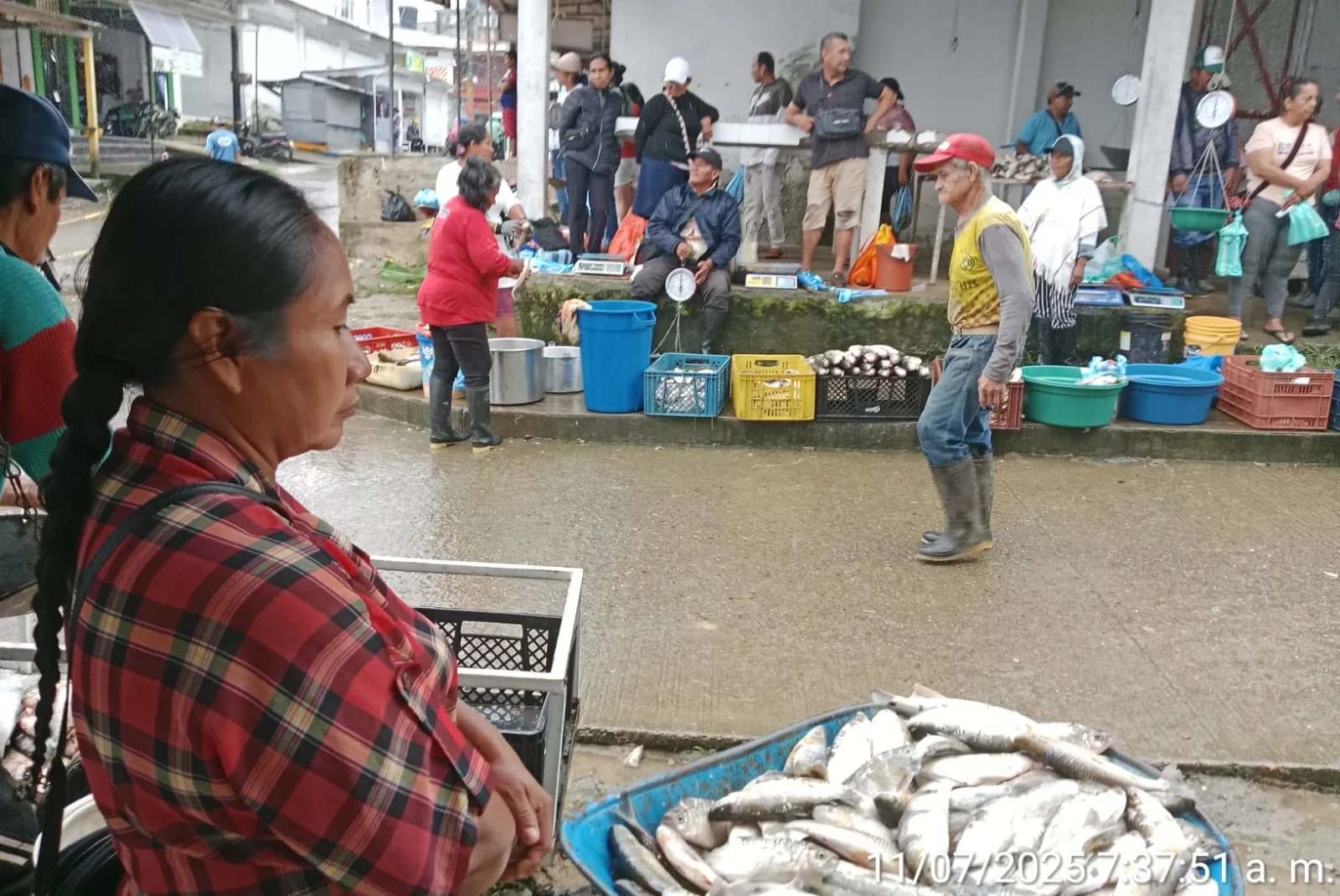
Venta de pescado en Puerto Leguízamo. La actividad pesquera forma parte de los aspectos socioeconómicos considerados en el sistema de monitoreo comunitario.
The system may also provide inputs for evaluating and, where necessary, adjusting existing community-based fisheries management agreements. These include AUNAP Resolution No. 1784 of 2016 and Resolution No. 125 of 2017, which regulate fishing activities in the Yahuarcaca and Tarapoto lake systems, respectively, in the Colombian Amazon River.
Monitoring Even Where There Is No Internet Access
The system’s design had to take into account limited internet access in the region. More than 70% of the Border Integration Zone has inadequate coverage, concentrated mainly in riverine areas along the Putumayo River between Puerto Leguízamo and Tarapacá.
For this reason, data collection combines paper-based records and digital tools. During the intervention, paper forms, KoboToolbox, and preliminary versions of the application developed by the project were used. In locations such as Yahuarcaca, Tarapoto, and Leguízamo, paper forms were the method most widely used by monitors.
To compile, organize, and make the information available, a prototype digital platform was developed. It is already hosted on a virtual server and has a website enabled for access. The system allows data to be recorded offline: information is temporarily stored on the device and can be synchronized with the central system once connectivity is restored.
Records collected on paper can also be entered later when an internet connection becomes available. In this way, field data on fish biology, fishing effort, commercialization, or water quality can be uploaded asynchronously, adapting the monitoring process to connectivity conditions in the Amazon.
Communities at the Center of Monitoring
Throughout the intervention, 33 community and institutional meetings were held. Of these, 63.6% involved communities and users, while 36.4% involved organizations and institutions.
The process also contributed to a broader understanding of the relationship between territories and the river basin. Discussions during the meetings addressed how actions carried out in one location can affect aquatic ecosystems beyond the boundaries of individual communities.
For the women of the Tarapoto Lake System, participation in monitoring has also been a way to strengthen their capacities, recognize themselves as women fishers, and highlight the value of their cultural knowledge related to fishing.
“This process also helps us, as women, to make our contribution to the entire territorial process and to ensure that local and national authorities recognize that women are a fundamental part of social, cultural, and environmental processes in the territory,” says Lilia.
During the intervention, communities received support through in-person visits and WhatsApp groups to answer questions and assist with data recording. Following the completion of the intervention, the SINCHI Institute’s Aquatic Ecosystems Group continues to provide technical support to monitoring initiatives in communities that have voluntarily decided to continue the process.
-
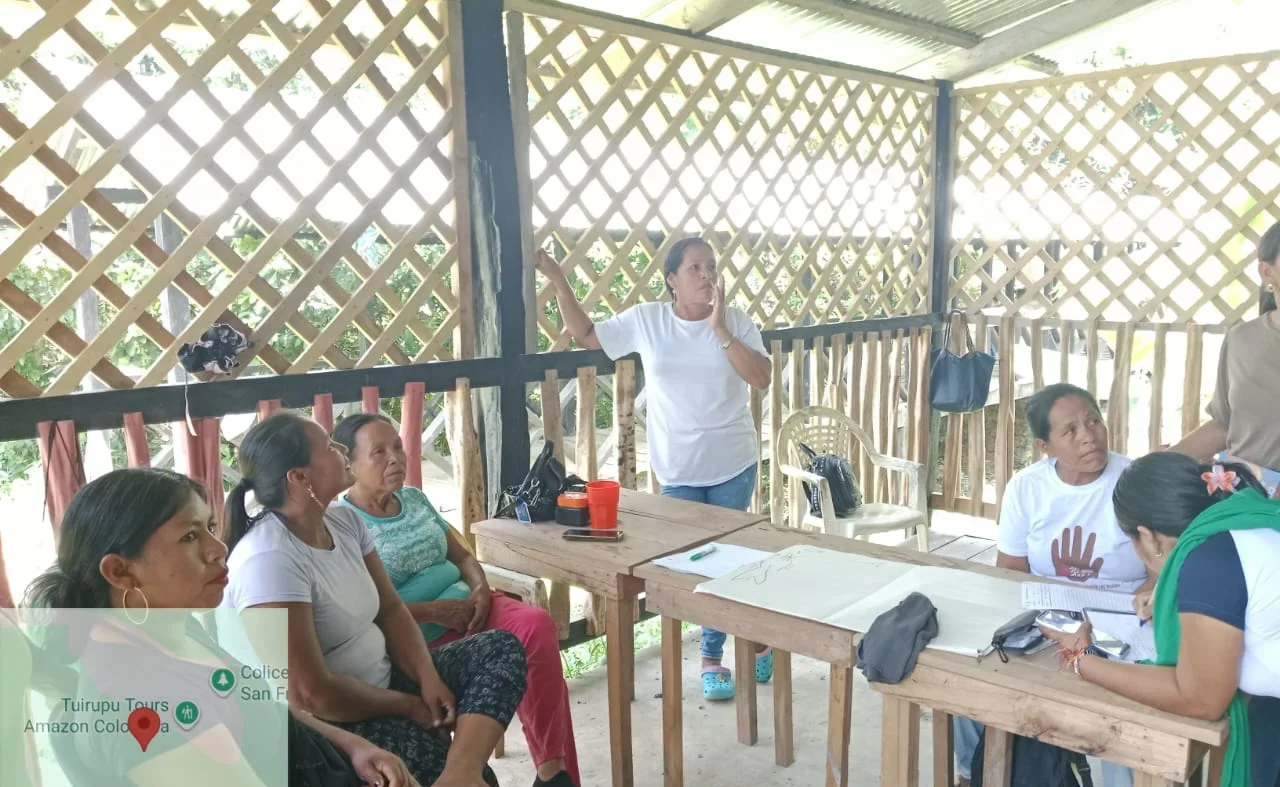
- Mujeres del Sistema Lagunar de Tarapoto participan en una jornada de socialización sobre la toma de datos para el monitoreo comunitario de los ecosistemas acuáticos y de la pesca.
-
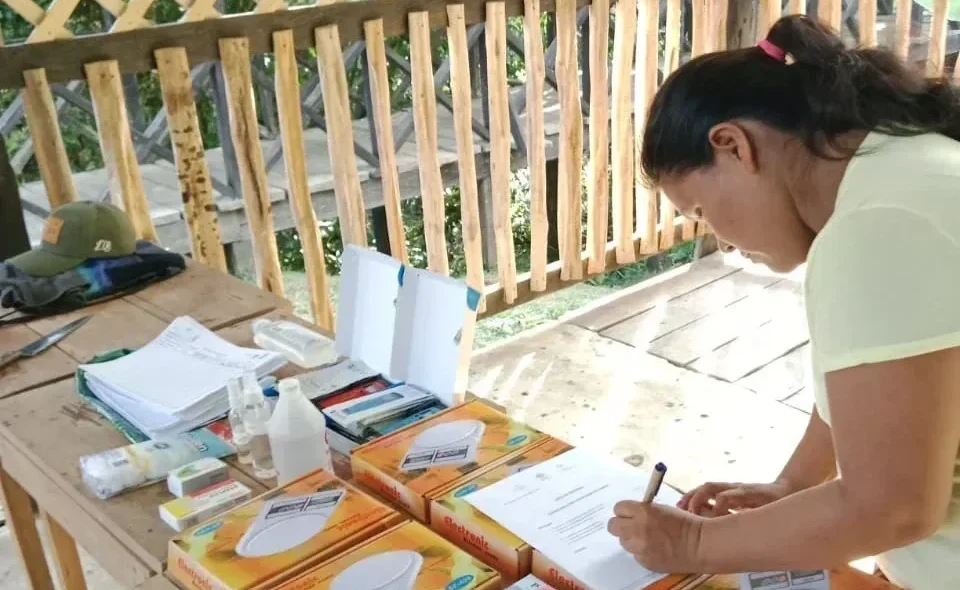
- Entrega de equipos a mujeres del Sistema Lagunar de Tarapoto para apoyar las actividades de monitoreo comunitario de los ecosistemas acuáticos y de la pesca.
Dialogue Between Colombia and Peru
Although the six monitoring sites are located on the Colombian side of the Border Integration Zone, the intervention included opportunities for dialogue and exchange between stakeholders from Colombia and Peru.
In February 2026, representatives of the six locations participated in an exchange of experiences in Puerto Leguízamo on fisheries, monitoring, good practices, and fisheries management. In March, a technical meeting held in Bogotá brought together, among other participants, the National Aquaculture and Fisheries Authority (AUNAP), Corpoamazonia, the SINCHI Institute, and the Ministry of Environment and Sustainable Development from Colombia, as well as the Loreto Regional Directorate of Production (DIREPRO) and the Peruvian Amazon Research Institute (IIAP) from Peru.
The dialogue sought to identify opportunities to analyze issues of common interest on both sides of the border, such as the sizes of commercially caught species, landing volumes, fish consumption, and physicochemical water variables. Fisheries and scientific authorities from both countries recognized the prototype’s potential as a tool for assessing the status of fisheries resources and aquatic ecosystems, as well as the need to advance its deployment and evaluate its performance under field conditions.
An Experience with Potential for the Amazon Basin
The prototype digital platform was developed with interoperability with other systems in mind. To this end, technical documentation was prepared to enable information exchange through programming interfaces.
The system was also designed to be flexible so that it can be adopted by other interested communities, expanding its potential application to other Amazonian territories.
As a next step, ACTO plans to move forward, within the framework of the Amazon Basin Project, with the implementation and consolidation of a monitoring programme for aquatic ecosystems and Andean-Amazon wetlands, drawing on the experience and results obtained during the development of the monitoring system in the Border Integration Zone.
Consolidating the experience will depend on continued data collection and the conditions needed to maintain equipment, train monitors, organize and analyze data, and periodically evaluate results.
With a continuous series of data, monitoring can expand knowledge of changes in aquatic ecosystems and fisheries and strengthen the information base available for decision-making on conservation and the sustainable management of fisheries resources in the Amazon.
Photos: Amazon Basin Project Archive
Related news
22 de September de 2026
The Amazon Network of Water Authorities (ANWA) has approved its 2026–2028 Work Plan, which sets out the priorities and actions [...]
11 de September de 2026
With support from the Amazon Basin Project – Implementation of the Strategic Action Program (SAP), Ecuador declared the Nueva Esperanza [...]
9 de September de 2026
A process built around the realities and needs of Guyana and Suriname seeks to strengthen the foundations for Integrated Water [...]
