

Index
Topics
Share
Colombia launched, in late July, the series of National Nexus WEFE Workshops to be held across the eight Member Countries of the Amazon Cooperation Treaty Organization (ACTO). Following Bogotá, the initiative continued in La Paz, Bolivia, and reached Quito, Ecuador, on September 2. The workshops mark the beginning of a regional process aimed at developing an integrated understanding of the relationships between water, food production, energy and ecosystems, and incorporating these interdependencies into the management of the Amazon Basin.
Held within the framework of the Amazon Basin Project (ACTO/UNEP/GEF), the workshops aim to update the Water–Energy–Food–Ecosystems (WEFE) Nexus Assessment of the Amazon Basin. The assessment seeks to understand how these four systems are interconnected and how decisions made in one can have positive or negative effects on the others. The process incorporates information, experiences and priorities from the Member Countries and brings together representatives from different sectors to develop a shared understanding of the challenges and possible responses.
The Nexus approach is based on a simple but crucial premise for Basin management: water, food, energy and ecosystems are interdependent systems. The expansion of agricultural production, for example, increases water demand and can place pressure on forest areas; the loss of ecosystems, in turn, affects the water regulation on which food production itself depends. Likewise, decisions regarding energy generation can have impacts on rivers, biodiversity and communities.
It is precisely this set of relationships — including synergies, conflicts and trade-offs between sectors — that is analyzed during the workshops. Participants combine technical knowledge and institutional experience with exercises based on different climate and development scenarios. The analysis progresses from identifying interdependencies to discussing alternatives for resilient infrastructure, nature-based solutions and sustainable energy pathways. At the end of each workshop, each country identifies key messages and recommendations that will subsequently be incorporated into the regional analysis.
In Colombia, pressures on the territory cut across different sectors
Held in Bogotá on July 27 and 28, the first workshop brought together 18 participants from national institutions representing different sectors. Among the interdependencies analyzed, the relationship between agriculture and ecosystems emerged as particularly relevant, marked by the tension between the expansion of the agricultural frontier and conservation. Illegal mining, illicit crops and deforestation were also identified as pressures affecting water, ecosystems, livelihoods and territorial management.
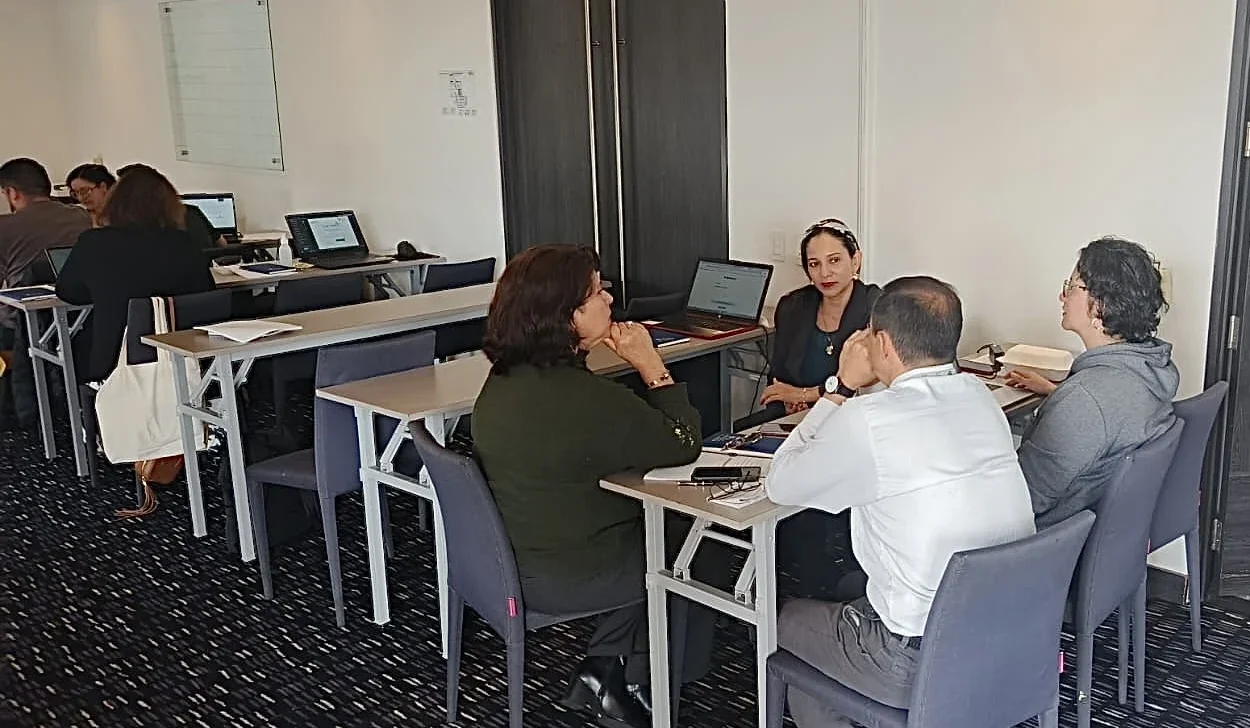
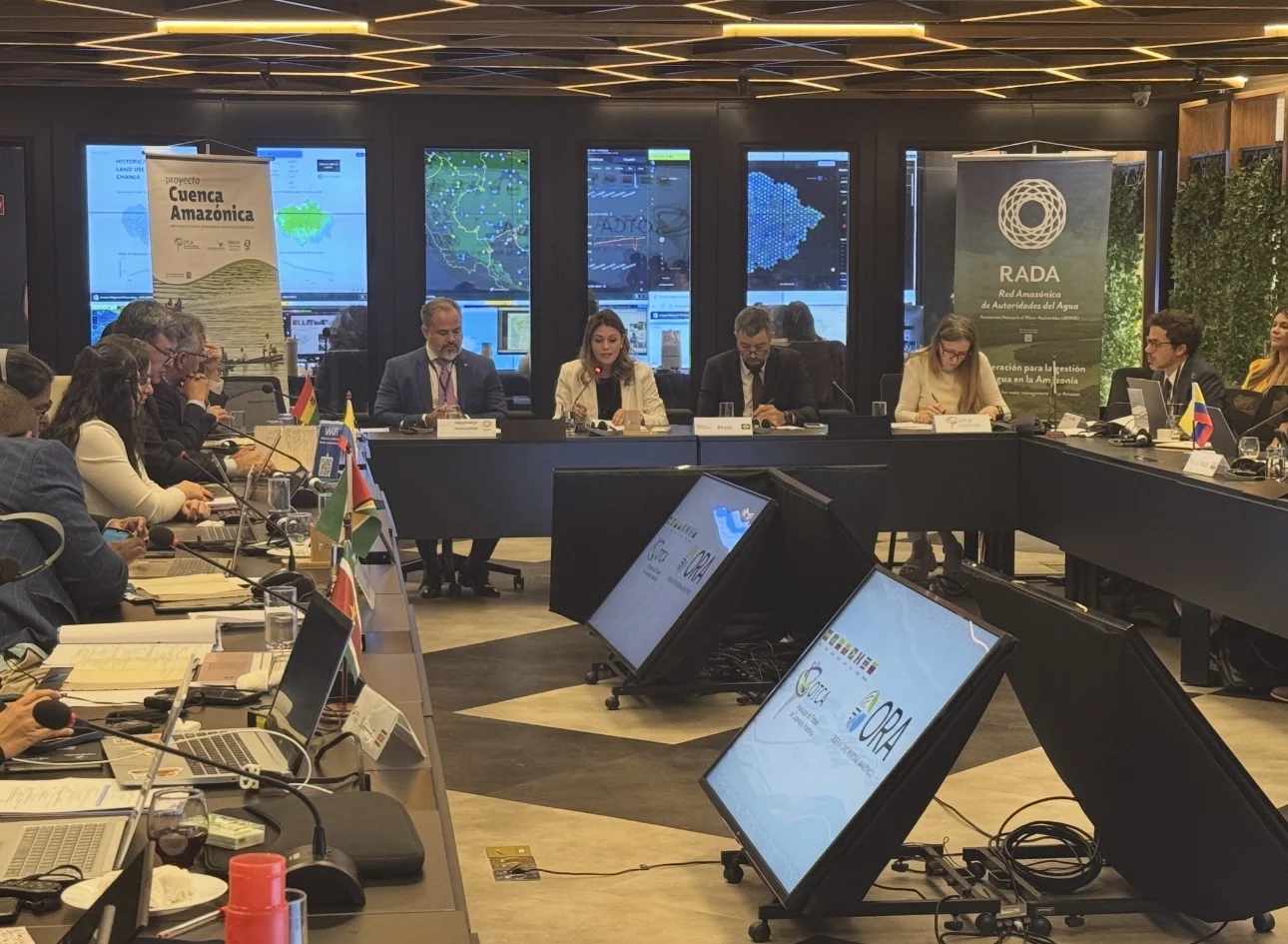
Participants in the National Nexus WEFE Workshop, held in Bogotá, work in groups to analyze the interdependencies between water, food, energy and ecosystems.
The discussions also highlighted challenges related to governance and institutional coordination. Despite existing technical capacities, participants identified difficulties in coordinating across sectors and levels of government, as well as in translating available knowledge into action on the ground. Priorities included strengthening institutional coordination and building a vision for the Amazon that goes beyond sectoral approaches.
Responses discussed included nature-based solutions, territorial control measures, hydroclimatic monitoring and forecasting systems, and renewable energy alternatives for isolated areas.
In Bolivia, information is key to integrating different sectors
In Bolivia, mining emerged as one of the main pressures on water systems and Amazonian ecosystems, particularly due to pollution associated with illegal mining and gold extraction. During the discussions, its impacts were linked not only to water quality and ecosystem conservation, but also to governance and the capacity to exercise control over territories.
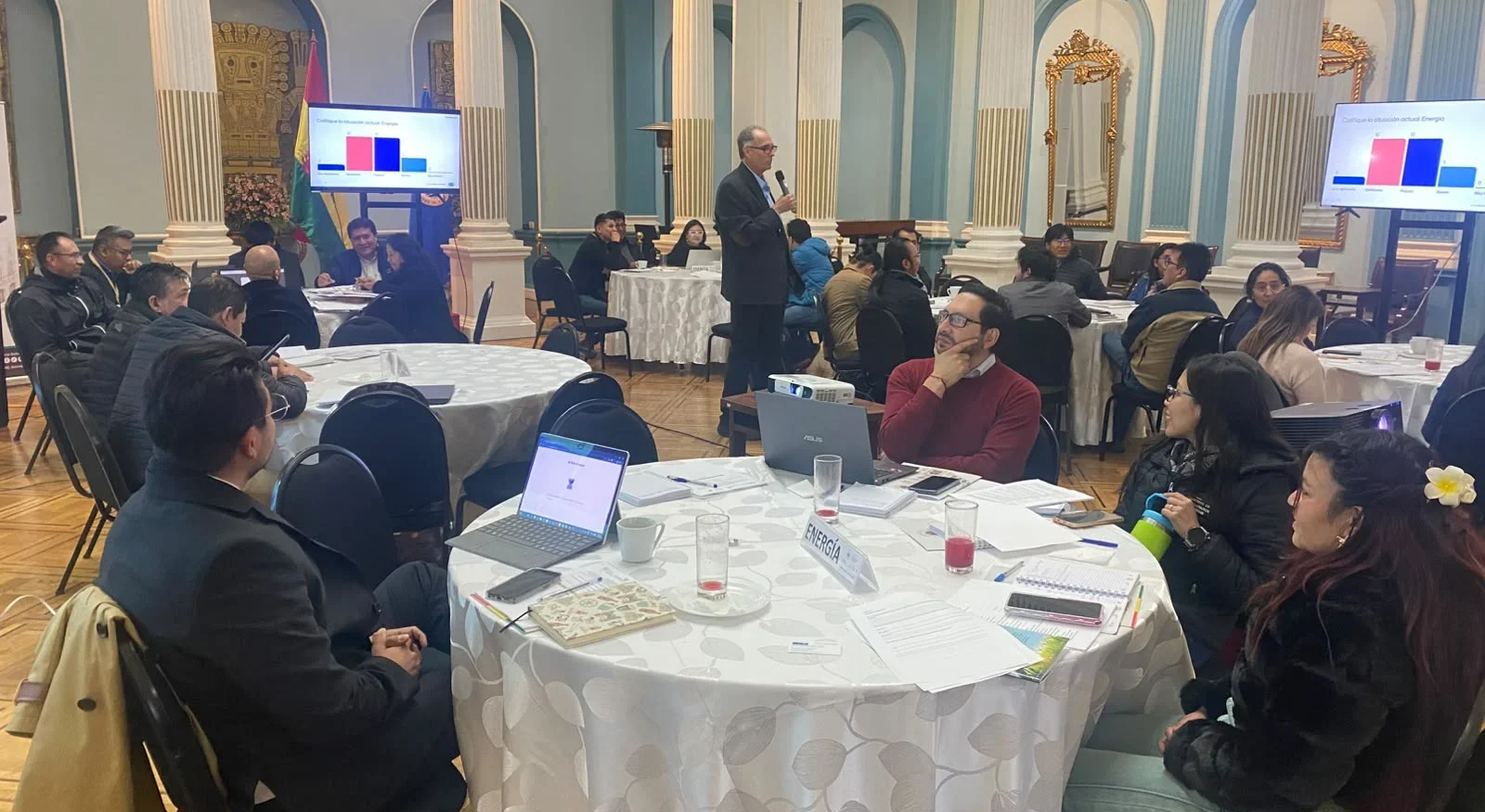
Representatives from different sectors participate in the National Nexus WEFE Workshop in La Paz, contributing to an integrated analysis of challenges related to water, food, energy and ecosystems.
When analyzing the conditions needed to address issues such as this in an integrated manner, participants pointed to a challenge that lies not so much in the available technical capacity, but rather in coordination among institutions and information exchange. Technical capacity was assessed more positively than governance, institutional coordination and data sharing.
The flow of information therefore became a central issue during the Bolivian workshop. The groups emphasized the need to integrate, verify and share data that are currently dispersed among different institutions. The issue is not simply to produce more information, but to create mechanisms that allow existing knowledge to circulate across sectors and support integrated decision-making.
In Ecuador, the relationship between water and energy emerges as a key interdependency
The 30 representatives of institutions from the water and environment, energy, climate, infrastructure, risk management and territorial planning sectors who participated in the Nexus Workshop in Ecuador identified the relationship between water and energy as the most relevant interdependency for the country, followed by the relationship between water and agriculture. This relationship is particularly important in a country that relies heavily on hydropower generation and, therefore, on water availability.
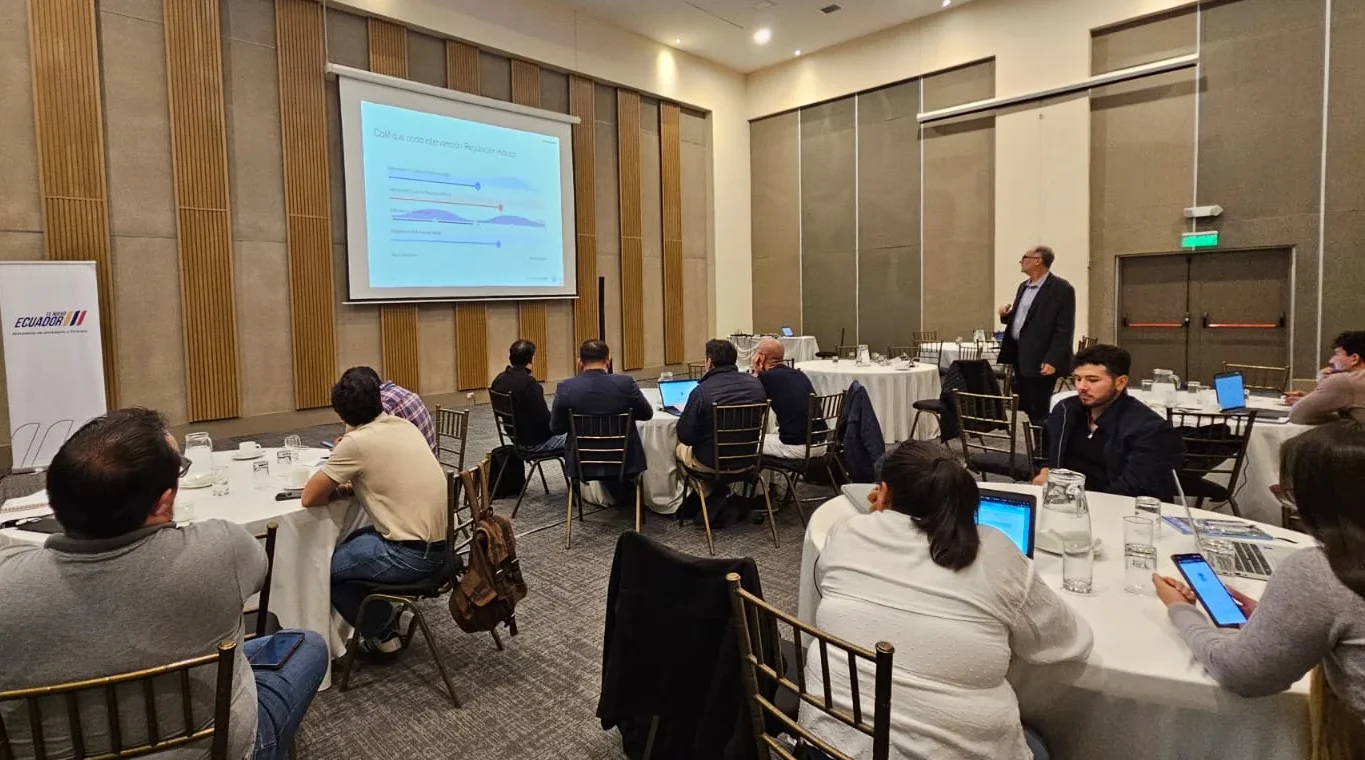
Participants attend discussions during the National Nexus WEFE Workshop in Quito, which brought together representatives from different sectors to analyze the interdependencies between water, food, energy and ecosystems.
This vulnerability became evident during the recent energy crisis caused by a period of severe low-water conditions. During the workshop, droughts, floods and water quality issues were among the main risks identified, while the El Niño phenomenon emerged repeatedly because of its potential simultaneous impacts on water, energy and food security, as well as on infrastructure. In this context, water security, sustainable energy, governance and resilient infrastructure were among the main priorities identified by participants.
Responses discussed included improving the management of multipurpose systems — infrastructure that combines different uses of water —, strengthening the coordination of water resources management with different sectors, integrating information across institutions, and promoting green economy initiatives aimed at forest conservation. When comparing the alternatives, the green economy received the highest ratings for environmental performance, climate resilience and cross-sectoral benefits, while multipurpose systems stood out for their contribution to economic growth and their cross-sectoral benefits.
From national priorities to a regional vision
Although each workshop begins with the specific conditions and priorities of each country, the results are produced using a common methodology. Information on interdependencies, risks, scenarios and national recommendations will be organized into comparative matrices to enable the identification of common patterns, convergences, divergences and opportunities for transboundary cooperation.
As the series progresses across the eight Member Countries, these results will feed into the regional WEFE Nexus Assessment of the Amazon Basin, bringing together the national analyses to build a regional understanding of the relationships between water, food, energy and ecosystems. The process will make it possible to identify both the specific characteristics of each country and the challenges and interdependencies that transcend national borders.
The results are also expected to generate technical inputs and recommendations for the Strategic Action Program (SAP) and for the supplement to the Transboundary Diagnostic Analysis and SAP (TDA/SAP), helping to incorporate these interdependencies into the integrated management of the Amazon Basin.
Related news
23 de September de 2026
Communities from six locations in the Putumayo and Amazon River basins in Colombia participated in the development of a community-based [...]
22 de September de 2026
The Amazon Network of Water Authorities (ANWA) has approved its 2026–2028 Work Plan, which sets out the priorities and actions [...]
9 de September de 2026
A process built around the realities and needs of Guyana and Suriname seeks to strengthen the foundations for Integrated Water [...]
